Winter Math Relay Games for Kids: Fun Holiday Learning
Math relays offer a practical, high-energy way for families to keep math skills fresh during school breaks. Instead of asking children to sit through extra worksheets or online drills, math relays turn problem solving into short, active challenges that feel more like play than study. For parents looking to reduce learning loss without adding pressure, this format naturally raises an important question: what exactly are math relays, and why do educators rely on them so often?
What Are Math Relays?
Math relays are structured math activities where children solve a series of problems one step at a time, often under light time limits or as part of a team. Inspired by relay races, each child completes one task before moving on to the next problem—or passing the turn to a sibling or teammate. The focus is on quick thinking, accuracy, and steady progress rather than long written assignments.
Originally developed as a classroom engagement strategy, math relays have been used by teachers for decades to make review sessions more effective and less monotonous. Over time, they’ve become popular beyond schools—appearing in enrichment programs, math clubs, and increasingly in home learning settings. For families, math relays offer a flexible alternative to traditional practice that still reinforces core skills.

Why Math Relays Work During Winter Break
Long school breaks often disrupt routines, and many parents notice that math skills can slip without regular practice. Winter break math relays help fill this gap with short, focused activities that fit easily into a day at home. Because children are moving, thinking quickly, and working toward small goals, they stay engaged without feeling like they’re “back in class.”
Math relay games typically combine:
- Active recall of essential math facts
- Timed problem solving to build fluency and confidence
- Physical movement, which supports focus and memory
- Teamwork or self-competition, which keeps motivation high
These activities work well for children ages 4–12 and can be adapted for siblings, playdates, classrooms, or even solo challenges. A simple relay might involve solving one problem at the kitchen table, moving to another room for the next challenge, and continuing until the sequence is complete.
By blending play with purposeful practice, math relays help children stay academically sharp while building positive associations with math—confidence, enjoyment, and a sense of accomplishment rather than stress.
Creative Math Relay Activities at Home
Math relays work best when they feel simple to set up and exciting to play. The activities below are designed for winter break at home—using everyday materials, short time blocks, and flexible rules that grow with your child. Families can mix and match based on age, space, and skill level.
1. Snowball Equation Relay
Best for: Addition, subtraction, multiplication (ages 5–10)
How to set it up
- Write math problems on paper, crumple them into “snowballs,” and scatter them in a basket or corner.
- Use color-coding to adjust difficulty (for example, blue = easier, red = harder).
How to play
- One child runs to grab a snowball.
- Runs back and solves it on paper or a whiteboard.
- Tags the next teammate—or repeats the cycle solo against a timer.
Why parents like it: High energy, quick rounds, and easy differentiation.
2. Multiplication Ski Slalom
Best for: Multiplication facts and fluency (ages 7–12)
How to set it up
- Create a zig-zag “slalom course” with pillows, cones, or winter décor.
- Place a multiplication card at each stop.
How to play
- Kids “ski” (hop, run, or slide) to each station.
- Solve the problem before moving on.
- Finish the course or tag the next runner.
Challenge upgrade: Use multi-digit multiplication or mixed operations.
3. Geometry Scavenger Relay
Best for: Shapes and spatial reasoning (ages 4–10)
How to set it up
- Make a list of shapes to find around the house.
How to play
- Kids race to find an object that matches a shape.
- Bring it back and name the shape correctly.
- Tag the next person.
Try shapes like: Sphere, cylinder, cube, cone, rectangular prism.
4. Number Line Dash
Best for: Number sense, operations, fractions (ages 5–11)
How to set it up
- Lay number cards on the floor to form a large number line.
How to play
- Call out a math prompt (e.g., “8 − 3” or “½”).
- Kids run to stand on the correct answer.
- Tag the next player or continue with the next question.
5. Fraction Pizza Relay
Best for: Fractions and equivalence (ages 7–12)
How to set it up
- Use printed or hand-drawn fraction circles (“pizzas”).
- Prepare fraction cards.
How to play
- A child draws a fraction card.
- Runs to match it with the correct pizza model.
- Returns to draw the next card or tag a teammate.
Learning focus: Visualizing parts of a whole and equivalent fractions.
6. Snowflake Pattern Relay
Best for: Patterns and early algebra thinking (ages 4–9)
How to set it up
- Prepare pattern cards with missing elements.
How to play
- Kids run to a card.
- Fill in the next part of the pattern.
- Return and tag the next runner.
Pattern ideas: ABBA, ABC, 2–4–6–8, growing shapes.
7. Time-Telling Trail
Best for: Clocks and elapsed time (ages 6–10)
How to set it up
- Place analog and digital clock cards around the room.
How to play
- Call out a time (e.g., “3:45”).
- Kids run to the matching clock.
- Say the time in words or convert formats.
Extension: Add 15-minute or 30-minute elapsed-time questions.
8. Money Market Dash
Best for: Money, decimals, real-world math (ages 6–11)
How to set it up
- Create a “store” with items labeled with prices.
How to play
- Give kids a target amount.
- They race to select items that total that amount.
- Return to check their math before tagging the next player.
9. Measurement Relay
Best for: Measurement and unit conversion (ages 7–12)
How to set it up
- Use rulers, measuring tape, cups, or known-length objects.
How to play
- Station 1: Estimate the measurement.
- Station 2: Measure the object.
- Station 3: Convert units or compare results.
10. Word Problem Walk
Best for: Reading + math integration (ages 7–12)
How to set it up
- Tape winter-themed word problems along a hallway or room.
How to play
- Kids run to a card, read the problem, and solve it.
- Move to the next card until the relay ends.
Themes: Snowmen, cookies, sleds, lights, winter animals.
11. Indoor Obstacle Course Math Relay
Best for: Full-body movement + mixed skills (ages 5–12)
How to set it up
- Create a simple obstacle path with pillows, chairs, or tape lines.
- Place math cards at the end.
How to play
- Complete the obstacle.
- Solve the math challenge.
- Return or continue to the next round.
12. Decimal Ski Jump (Upper Elementary)
Best for: Decimal comparison and number sense (ages 9–12)
How to set it up
- Draw a “ski jump” labeled with decimals (0.1, 0.25, 0.5, 0.75, 1.0).
How to play
- Kids draw a decimal card.
- Run to stand on the closest value.
- Explain which decimals are larger or smaller and why.
Parent Tip for Winter Break Success
You don’t need to run every relay perfectly—or all at once. Even 10–15 minutes a day keeps skills sharp and builds positive math habits. Rotate activities, adjust difficulty, and let kids help design new relay stations to keep motivation high throughout winter break.
Making Math a Lasting Holiday Tradition
The real magic of winter break math relay games is how they transform math from a chore into a celebration. By weaving these activities into your holiday traditions each year, you can build a culture at home where learning is active, joyful, and shared.
When children dash between stations, solve puzzles, and cheer for their teammates, they begin to see math as a meaningful part of everyday life. Over time, this mindset supports stronger academic performance and a healthier relationship with learning. Every relay game becomes a small step toward curiosity, resilience, and confidence—turning winter break into an opportunity for growth rather than a pause in progress.
To extend the benefits of your winter break math relays, pair these fun activities with Think Academy Christmas Worksheets – 300 pages for each grade!
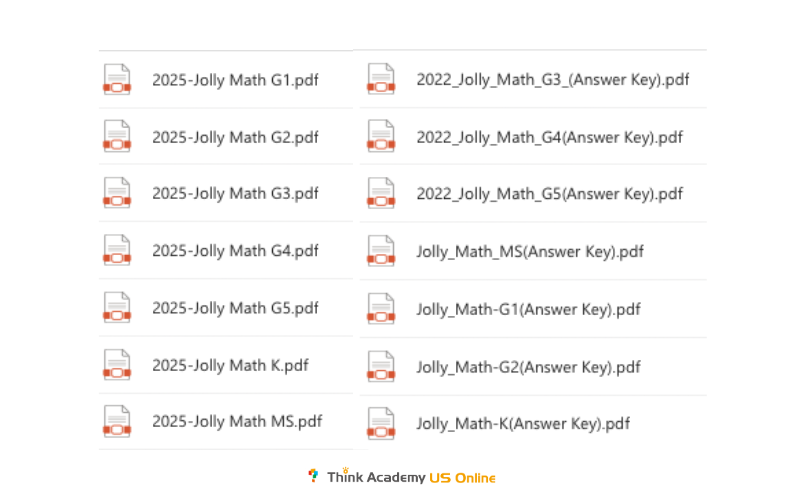
These high-quality practice materials reinforce the exact skills kids strengthen during relay games—number sense, problem-solving, and logical reasoning. They also help families build consistent at-home learning habits, creating a steady, motivating routine that’s easy for parents and highly effective for growing learners. With playful relays and structured practice working together, your child enters the new school term confident, engaged, and ready to excel.
For long-term math skill development and confidence, visit and sign up for Think Academy’s free grade-level math worksheets to receive regular practice updates.
About Think Academy
Think Academy, part of TAL Education Group, helps K–12 students succeed in school today by building strong math foundations and critical thinking skills. At the same time, we focus on the bigger picture—developing learning ability, curiosity, and healthy study habits that inspire a lifelong love of learning. With expert teachers, proven methods, and innovative AI tools, we support every child’s journey from classroom confidence to long-term growth.
Check our math programs:
- Early Childhood — PreK
- Lower Elementary — Grades K–2
- Upper Elementary — Grades 3–5
- Middle School — Advanced math topics, including Algebra 1, Algebra 2, and Geometry
Want more insights on math learning and parenting? Fill out the form on this page and subscribe to our newsletter for weekly tips and the latest resources.
Leave a Comment & Share Your Thoughts!
Share This Story, Choose Your Platform!
Related Posts