When the Violin “Cries”: A Lesson for Art Education
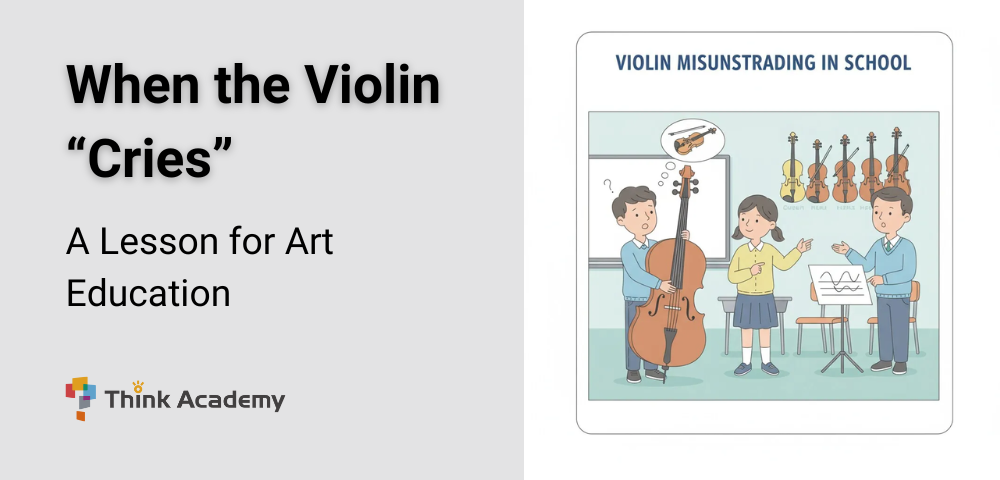
The similarity between violin sounds and crying has led to some amusing — and occasionally awkward — moments in schools. This phenomenon highlights not only the expressive nature of the violin but also deeper issues in how art and sound are perceived within education.
As students strive to master this intricate instrument, the sounds they produce are sometimes misinterpreted, sparking both confusion and conversation.
The Unusual “Identity” of the Violin
The violin, often described as the most expressive of all instruments, can evoke a wide range of emotions. Its tones can be soothing and lyrical — or sharp and intense, depending on the player’s technique and experience.
However, it’s this emotional versatility that can cause misunderstandings. When beginners are still learning to control pitch and bow pressure, the resulting screeching or wavering notes can sound surprisingly similar to crying. To the untrained ear, what is actually a practice session might sound like distress.
This misunderstanding doesn’t reflect the violin’s value; rather, it shows how little exposure many students and parents have to the nuances of instrumental learning. Historically, the violin has been celebrated for its ability to mimic the human voice — an attribute that makes it both powerful and, at times, easily mistaken.

The Impact on Art Education
Such misinterpretations have real implications for K–12 art programs. Some young learners may feel embarrassed or discouraged if their early attempts are laughed at or misunderstood. This can lead to reduced motivation, lower confidence, and even decisions to quit music lessons altogether.
On the other hand, these moments offer a valuable opportunity for educators. Schools can use them to deepen understanding and appreciation of music through:
- Demonstrations and workshops that show how violin sounds evolve as students improve.
- Parent education sessions that explain the stages of musical development.
- Collaborative performances that help normalize the learning process and celebrate progress.
By fostering empathy and awareness, teachers can help both students and parents view the “crying violin” not as noise but as the sound of growth and perseverance.
Reframing the Sound: A Lesson Beyond Music
The confusion between violin sounds and crying serves as a metaphor for how society perceives early artistic effort. Art, like any discipline, begins imperfectly. Recognizing this process — rather than mocking it — can reshape how creativity is supported in schools.
When students feel safe to make mistakes and explore expression, they not only become better musicians but also develop patience, emotional intelligence, and resilience — qualities that extend far beyond the music room.
Conclusion
The violin’s resemblance to crying is more than an auditory coincidence; it’s a reminder of how deeply art and emotion intertwine. Schools that encourage curiosity over criticism create space for genuine artistic growth. By understanding the true nature of the violin — and the learning process itself — educators can turn misunderstanding into appreciation, helping every student find their voice through sound.
About Think Academy
Think Academy, part of TAL Education Group, helps K–12 students succeed in school today by building strong math foundations and critical thinking skills. At the same time, we focus on the bigger picture—developing learning ability, curiosity, and healthy study habits that inspire a lifelong love of learning. With expert teachers, proven methods, and innovative AI tools, we support every child’s journey from classroom confidence to long-term growth.
Want more insights on math learning and parenting? Subscribe to our newsletter for weekly tips and the latest resources.
Leave a Comment & Share Your Thoughts!

Share This Story, Choose Your Platform!
Related Posts










