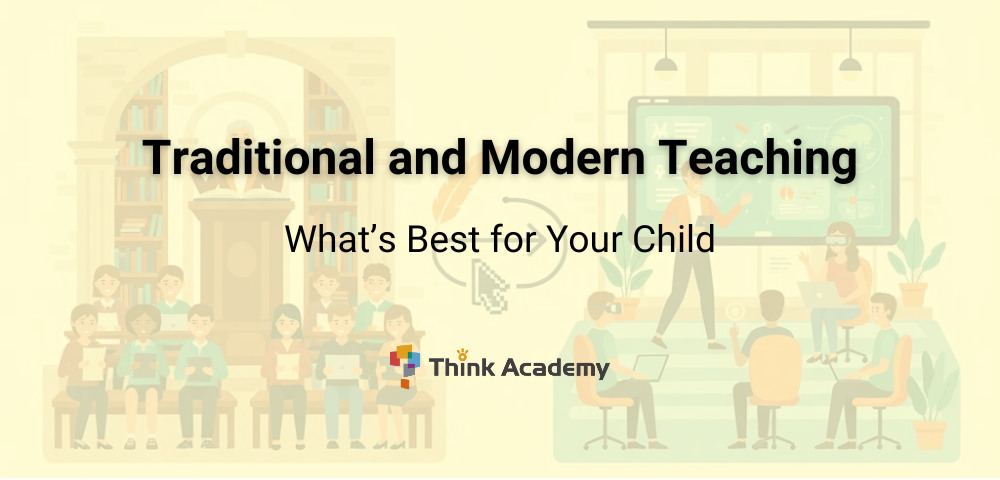
Traditional and Modern Teaching: What’s Best for Your Child
Walk into any classroom today and you’ll see a mix of old and new: a teacher leading a discussion at the whiteboard, students taking notes on laptops, and lessons shared online for later review. Education is evolving fast—but one question remains constant for parents: Which teaching approach actually helps my child learn best?
The truth is, both traditional teaching methods and modern learning tools have important roles to play. When used together, they can create the kind of balanced, engaging education every parent hopes for.
Why Traditional Teaching Still Matters
For generations, traditional teaching methods—like face-to-face instruction, paper textbooks, and structured lessons—have helped students build strong academic foundations.
According to Britannica’s overview of education, these methods provide a systematic and organized approach that helps children master core skills in reading, writing, and math. The teacher’s role as a guide ensures that learning progresses step by step, building comprehension and discipline along the way.
Here’s why traditional methods continue to matter for K–12 students:
- Structure and stability: Routine lessons and clear expectations help children stay organized and focused.
- Direct human connection: In-person teaching allows teachers to notice emotional cues and give real-time support.
- Stronger fundamentals: Repetition and guided practice develop lasting understanding—especially in early grades.
Many parents find that younger students, in particular, benefit from the consistency and structure of traditional classroom routines before adding more independent or tech-based learning.

How Modern Tools Are Changing the Way Kids Learn
Technology has completely transformed how students access and interact with information. From online platforms to educational apps, children today have more ways than ever to learn—both inside and outside of school.
Modern tools help make learning interactive, personalized, and accessible:
- Interactive whiteboards: Teachers use visuals, videos, and quizzes to make lessons come alive.
- Online learning platforms like Khan Academy or Google Classroom allow students to learn anywhere, anytime.
- Educational apps: Tools like Quizlet or Prodigy give children extra practice in fun, game-like formats.
As Edutopia highlights, digital tools help students take more ownership of their learning. A child struggling with multiplication can review interactive practice sets, while another can explore advanced math challenges—all at their own pace.
The result? Greater engagement, confidence, and self-directed curiosity.

Why the Balance Between Old and New Matters
Neither approach works best on its own. A complete education uses both—the focus and rigor of traditional methods, combined with the creativity and flexibility of modern tools.
Imagine this: a teacher introduces a new science concept through a short lecture and discussion (traditional), then guides students through an online simulation to test hypotheses (modern). This blend keeps learning grounded yet exciting.
For K–12 families, the balance looks like this:
- Traditional learning builds discipline, focus, and interpersonal communication.
- Modern learning encourages creativity, collaboration, and digital literacy.
When teachers blend both, students learn how to think deeply and adapt quickly—skills that matter far beyond the classroom.
How Parents Can Support This Balance at Home
Parents play a key role in helping kids get the best of both worlds. Here are a few practical tips:
- Set screen-free study time. Encourage reading, handwriting, and discussion without digital distractions.
- Support digital learning responsibly. Guide your child through safe, age-appropriate online tools.
- Model curiosity. Ask questions, explore topics together, and show how learning can happen anywhere.
- Communicate with teachers. Ask how technology and traditional methods are integrated in class and what works best for your child.
Home routines that balance structure and flexibility mirror the same balance successful classrooms aim to achieve.
Preparing Students for the Future
The future belongs to learners who can blend deep thinking with digital skills. Traditional teaching nurtures focus and resilience; modern technology sparks innovation and independence. Together, they prepare students for a world where both human creativity and digital fluency are essential.
For families, the goal isn’t choosing one over the other—it’s helping children benefit from the best of both. When schools and parents work together, students grow not just smarter, but more adaptable, confident, and ready for whatever comes next.
About Think Academy
Think Academy, part of TAL Education Group, helps K–12 students succeed in school today by building strong math foundations and critical thinking skills. At the same time, we focus on the bigger picture—developing learning ability, curiosity, and healthy study habits that inspire a lifelong love of learning. With expert teachers, proven methods, and innovative AI tools, we support every child’s journey from classroom confidence to long-term growth.
Want more insights on math learning and parenting? Subscribe to our newsletter for weekly tips and the latest resources.
Leave a Comment & Share Your Thoughts!
Share This Story, Choose Your Platform!
Related Posts