Math Board Games for Kids: Winter Break Fun at Home
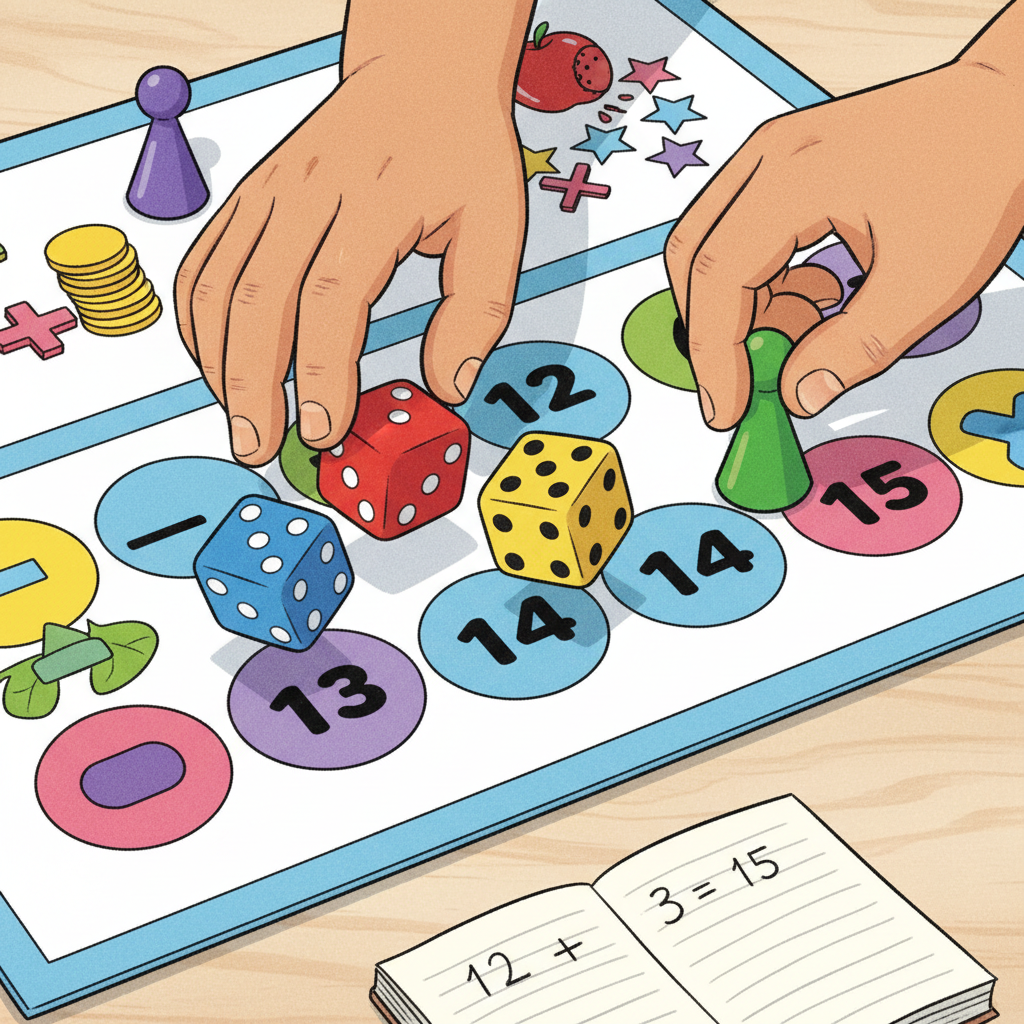
Winter break provides valuable unstructured time, but without the rhythm of school, learning can easily give way to passive screen use. Math board games for winter break offer a productive alternative by combining structured thinking, hands-on problem solving, and social interaction. When chosen intentionally, these games reinforce essential math skills while keeping children engaged in a relaxed, low-pressure environment.
Why Math Board Games Are Effective During School Breaks
Board games differ from digital tools and worksheets in one key way: students must think, decide, and adapt in real time. Math concepts are applied naturally as part of gameplay rather than presented as isolated exercises.
Well-designed math board games help children:
- Practice core skills such as counting, operations, and number relationships
- Develop logical reasoning and strategy
- Build confidence through repeated, low-stakes decision-making
- Strengthen communication and turn-taking skills
During winter break, these qualities help maintain learning momentum without recreating a classroom setting at home.

Recommended Math Board Games and the Skills They Build
Money Bags (by Learning Resources)
Best for: Ages 7+
Math focus: Coin recognition, addition, subtraction, making change
Money Bags teaches children how to identify U.S. coins and combine values to reach target amounts. Players practice real-world arithmetic while developing early financial literacy through gameplay.
Math Dice Jr. (by ThinkFun)
Best for: Ages 5–8
Math focus: Addition, subtraction, number sense
Math Dice Jr. builds flexible thinking by encouraging players to find multiple ways to reach a target number using dice. It strengthens mental math and early problem-solving skills.
Sequence Numbers (by JAX Games)
Best for: Ages 7+
Math focus: Number order, sequencing, patterns
Sequence Numbers combines strategy with number recognition as players place chips on a numbered board from 1 to 99, reinforcing numerical order and logical planning.
Prime Climb (by Math For Love)
Best for: Ages 10+
Math focus: Prime numbers, factors, multiplication, division
Prime Climb uses color-coded numbers to help students visualize prime factorization and numerical relationships, making abstract number theory concrete and engaging.
How to Use Math Board Games More Effectively
To ensure games lead to real learning:
- Ask players to explain their choices, not just make moves
- Pause occasionally to discuss alternative strategies
- Rotate games to cover different math skills
- Keep sessions short (20–30 minutes) to sustain focus
The conversation around the game often matters more than winning or losing.
What Learning Outcomes to Expect
With regular use, math board games can support:
- Improved arithmetic fluency
- Stronger number sense and reasoning
- Increased confidence when discussing math
- Better transfer of skills to schoolwork
They are most effective when used as supplements, reinforcing concepts students encounter elsewhere.
Conclusion
Math board games offer an engaging, screen-free way to keep learning active during winter break. By embedding math into play, these games help children practice essential skills while developing strategy, reasoning, and collaboration. They transform holiday downtime into meaningful learning experiences without sacrificing enjoyment.
To reinforce game-based learning with structured practice,
Think Academy offers free math worksheets for Kindergarten through Grade 10.
Organized by topic and paired with complete answer keys, these worksheets support core skills such as arithmetic, number sense, and problem solving—helping playful learning translate into lasting understanding.
About Think Academy
Think Academy, part of TAL Education Group, helps K–12 students succeed in school today by building strong math foundations and critical thinking skills. At the same time, we focus on the bigger picture—developing learning ability, curiosity, and healthy study habits that inspire a lifelong love of learning. With expert teachers, proven methods, and innovative AI tools, we support every child’s journey from classroom confidence to long-term growth.
Want more insights on math learning and parenting? Fill out the form on this page and subscribe to our newsletter for weekly tips and the latest resources.
Leave a Comment & Share Your Thoughts!

Share This Story, Choose Your Platform!
Related Posts










