How Student-Athletes Get Into College: Sports and GPA Guide
College admissions for student-athletes in the United States follow a unique pathway. Unlike traditional applicants, athletes must meet both athletic performance expectations and academic eligibility requirements. This ensures that those who shine on the field also succeed in the classroom. For K12 families, understanding these rules early can help students prepare for opportunities in college sports and beyond.

As we explore this topic, we’ll uncover the details of how these requirements work and their significance.
The Dual Path: Sports and Academics
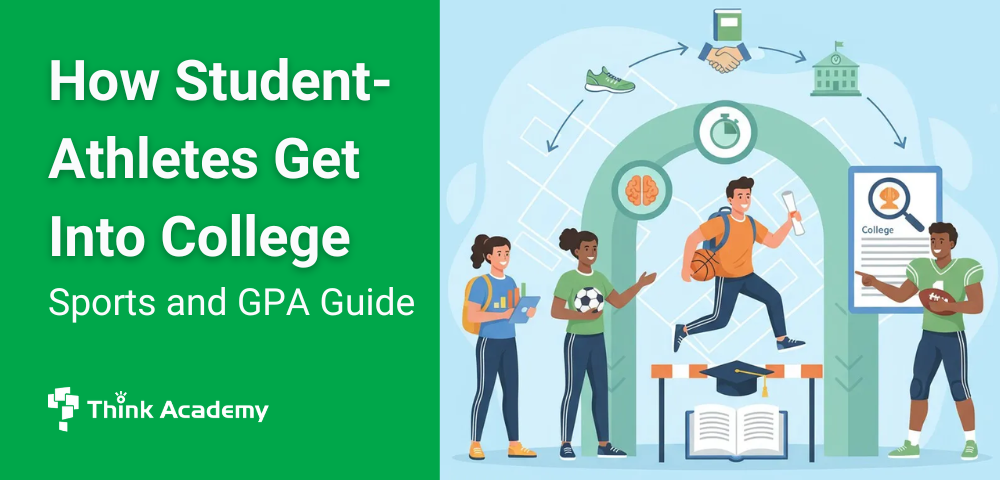
Being a student-athlete means juggling two demanding roles. On one side, athletes work hard to excel in their chosen sport. On the other, they need to maintain academic progress to remain eligible.
Take the example of a high school basketball player who dreams of joining a Division I university. Scoring points on the court is not enough — grades and coursework matter just as much. According to the NCAA (National Collegiate Athletic Association), over 180,000 Division I and II student-athletes must meet eligibility standards each year to compete. These rules protect the balance between athletics and education.

NCAA Eligibility Rules and Academic Requirements
Every prospective college athlete must meet NCAA eligibility requirements, which include both academic and amateurism standards.
Academic Eligibility: Core Courses and GPA
Student-athletes are evaluated based on two main factors:
- Core Courses: You must complete 16 NCAA-approved core courses in English, math, science, and social studies. Division I follows the 10/7 rule — 10 of the 16 must be completed by the start of senior year, and 7 of those must be in English, math, or science.
- Core Course GPA: Your GPA is calculated from these 16 courses, not your full transcript. For Division I, the minimum is 2.3; for Division II, it’s 2.2.
Even strong students can be ruled ineligible if they miss a required course. Families should check with school counselors to confirm that their classes are NCAA-approved.
While the NCAA no longer requires SAT/ACT scores, some colleges and scholarships still do. Checking individual school policies is essential.
Amateurism Requirements
To keep college sports fair, the NCAA enforces amateurism rules. Division I and II athletes must obtain amateurism certification before competing. Situations that may impact eligibility include:
- Accepting prize money beyond reimbursement.
- Signing with an agent or receiving benefits.
- Making money through athletic fame before enrollment.
The NIL (Name, Image, and Likeness) policy allows athletes to earn from endorsements while staying eligible, but families must follow NCAA and state rules carefully.
Division Differences at a Glance
- Division I: 16 core courses, GPA ≥ 2.3, 10/7 rule, stricter requirements.
- Division II: 16 core courses, GPA ≥ 2.2, fewer restrictions than D1.
- Division III: Standards set by each school, not NCAA.
- Junior College (JUCO): Requires a high school diploma or GED; often used as a stepping stone to NCAA eligibility.
Why Early Preparation Matters
NCAA eligibility begins long before senior year. Families should start preparing in middle or early high school by:
- Tracking GPA carefully to avoid last-minute surprises.
- Selecting high school courses that meet NCAA core requirements.
- Balancing training schedules with consistent study habits.
For example, Maya, a high school volleyball player, set her sights on a Division I program. She worked with her counselor to ensure her classes were NCAA-approved, maintained a 3.5 GPA, and trained year-round. When it came time for recruitment, she was not only athletically competitive but also academically qualified — a combination that opened scholarship opportunities.
Tips for Families and Students
Here are a few practical steps to stay on track:
- Check requirements yearly: Use the NCAA Eligibility Center to confirm core course lists.
- Communicate with counselors: Ensure your high school coursework aligns with NCAA expectations.
- Stay organized: Keep a record of grades, test scores, and athletic milestones.
- Ask about scholarships: Some require SAT/ACT scores even if the NCAA does not.
- Understand NIL rules: Earning from endorsements is possible, but compliance is key.
College admissions for student-athletes involve more than just sports talent. NCAA eligibility rules — from completing 16 core courses to maintaining amateur status — ensure athletes are ready for both academic and athletic challenges. Families who start early, plan coursework carefully, and stay informed can help their children thrive in this dual path.
Balancing books and sports is not easy, but it prepares students to succeed as true scholar-athletes, opening doors to college opportunities and lifelong growth.
Recommended Readings
- Navigating the Path to College Lacrosse: A Comprehensive Guide for High School Athletes
- Unlocking College Opportunities: The Top 3 Sports for High School Athletes
About Think Academy
Think Academy, part of TAL Education Group, helps K–12 students succeed in school today by building strong math foundations and critical thinking skills. At the same time, we focus on the bigger picture—developing learning ability, curiosity, and healthy study habits that inspire a lifelong love of learning. With expert teachers, proven methods, and innovative AI tools, we support every child’s journey from classroom confidence to long-term growth.
Want more insights on math learning and parenting? Subscribe to our newsletter for weekly tips and the latest resources.
Leave a Comment & Share Your Thoughts!

Share This Story, Choose Your Platform!
Related Posts










