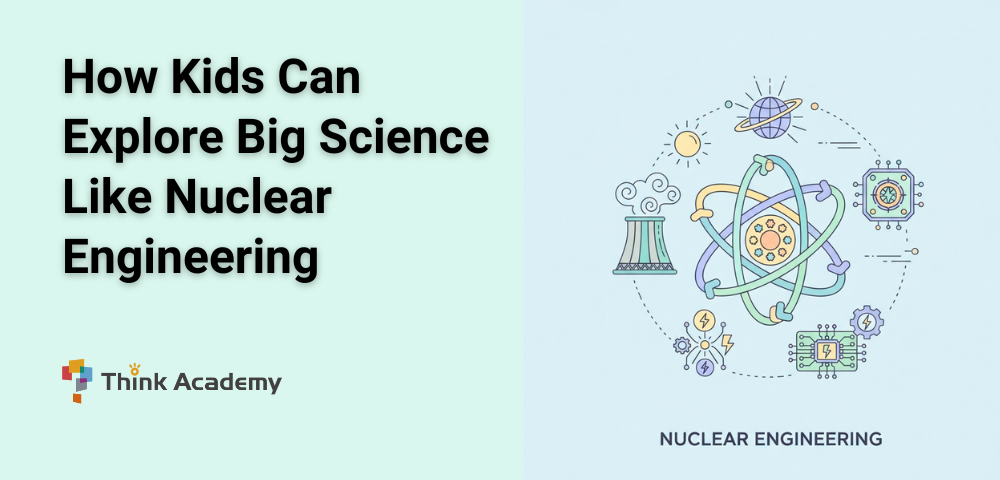
How Kids Can Explore Big Science Like Nuclear Engineering
When children ask big questions like “Where does electricity come from?” or “What makes things work?”, they are already thinking like future engineers. While fields such as nuclear engineering may sound far removed from childhood, the curiosity and thinking skills behind them begin developing much earlier than most parents realize. By nurturing these habits from a young age, families can help children grow comfortable with complex ideas long before they encounter them in school or future careers.
What Is Nuclear Engineering as a Major and Career?
Nuclear engineering is a STEM field that focuses on how energy is produced, controlled, and used at the atomic level. In college, students who major in nuclear engineering study subjects such as physics, advanced math, materials science, and energy systems. The work requires strong analytical thinking and comfort with complex ideas.
As a career, nuclear engineers often work in:
- energy and power generation
- medical technology (such as cancer treatment and imaging)
- national laboratories and research centers
- safety, regulation, and environmental protection
Challenges to Be Aware Of
Nuclear engineering is considered a rigorous and demanding field. Students must handle abstract concepts, advanced equations, and strict safety standards. The coursework is math- and physics-heavy, and professional responsibility is high because the work involves safety-critical systems.
Why Some Students Choose It
Despite the challenges, nuclear engineering offers meaningful outcomes. Careers in this field often focus on solving large-scale problems, such as producing reliable energy, improving medical treatments, or ensuring public safety. Graduates typically enter specialized, well-respected roles that value precision, responsibility, and long-term impact.
For families, the key takeaway is not early specialization, but understanding that this path rewards strong foundations in math, science, and problem-solving—skills that can be developed gradually starting in childhood.

How to Explain Big Science to Kids
Some science topics are easy to see. You can watch a plant grow or a ball roll. Nuclear engineering is different because it involves things that are too small to see, like atoms and energy inside matter.
Young children learn best when ideas feel real. That’s why the goal is not detailed explanations, but simple stories, comparisons, and hands-on experiences that build understanding over time.
Start with a Big Idea: Everything Is Made of Atoms
A helpful academic word to introduce early is atom.
You can explain it like this to a child:
“Everything around us is made of tiny building blocks called atoms. They are very, very small—so small we can’t see them—but they are everywhere.”
You might compare atoms to:
- LEGO pieces that snap together to make different objects
- grains of sand that form a beach when many come together
The important idea is simple: small pieces can make big things.
Introduce the Idea of Energy Through Everyday Life
Another key academic word is energy.
Children already understand energy in daily life, even if they don’t use the word yet.
You can point out:
- batteries give energy to toys
- electricity gives energy to lights and screens
- food gives energy to our bodies
- the sun gives energy to plants
You might say:
“Energy is what makes things move, light up, or change.”
This helps children understand that energy is not mysterious—it’s something they use every day.
Connecting Energy to Engineering (Without Saying “Nuclear” Yet)
Before talking about nuclear engineering, it helps to explain engineering itself.
You can describe engineering as:
“Engineering is when people design and build things to solve problems.”
Examples kids understand:
- building a bridge so cars can cross
- designing a stronger backpack
- making a machine that helps people do work
Later, you can add:
“Some engineers work on ways to make energy safely and efficiently. That’s where nuclear engineering comes in.”

Hands-On Activities That Make Ideas Stick
Children learn best by doing. Hands-on activities help turn abstract ideas into real experiences.
Simple activities include:
- building an “atom model” with balls and sticks
- playing with magnets to show invisible forces
- making a simple circuit with a battery and bulb
- building towers and testing which designs are stronger
These activities introduce academic ideas like structure, systems, and cause and effect without formal lessons.
For parents who want a general, non-technical overview of how nuclear energy fits into the energy world, Wikipedia provides a broad explanation that supports adult understanding.
Skills Children Are Really Learning
Even if children don’t remember the word “nuclear,” they are developing important academic skills.
They are learning:
- scientific thinking – asking “why” and “what if”
- problem solving – trying, adjusting, and trying again
- logical reasoning – understanding steps and patterns
- systems thinking – seeing how parts work together
These skills are the foundation of all advanced STEM fields.
A Helpful Mindset for Parents
Parents don’t need perfect answers. In fact, saying:
“I’m not sure—let’s find out together.”
teaches children that learning is a process.
Helpful habits include:
- encouraging questions
- letting kids explain ideas in their own words
- treating mistakes as learning steps
- connecting science ideas to real life
This builds confidence and curiosity, which matter far more than early technical knowledge.
Final Takeaway
Introducing nuclear engineering concepts to young children is not about teaching formulas or advanced science. It is about helping kids feel comfortable with big ideas—such as atoms, energy, and problem-solving—and confident asking questions about how the world works.
By using simple language, everyday examples, and hands-on exploration, parents help children build strong foundations in math, logic, and scientific thinking. These skills matter not only for future STEM majors like nuclear engineering, but for learning in general.
To support this foundation at home, Think Academy offers free, printable math worksheets designed to strengthen number sense, logical reasoning, and step-by-step problem solving for ages 4–12. These worksheets give children structured practice that complements curiosity-driven learning and helps turn early interest into lasting understanding.
About Think Academy
Think Academy, part of TAL Education Group, helps K–12 students succeed in school today by building strong math foundations and critical thinking skills. At the same time, we focus on the bigger picture—developing learning ability, curiosity, and healthy study habits that inspire a lifelong love of learning. With expert teachers, proven methods, and innovative AI tools, we support every child’s journey from classroom confidence to long-term growth.
Check our math programs:
- Early Childhood — PreK
- Lower Elementary — Grades K–2
- Upper Elementary — Grades 3–5
- Middle School — Grades 6–10
Want more insights on math learning and parenting? Fill out the form on this page and subscribe to our newsletter for weekly tips and the latest resources.
Leave a Comment & Share Your Thoughts!
Share This Story, Choose Your Platform!
Related Posts