Holiday Symmetry Activities for Kids: Fun Geometry at Home
Holiday symmetry activities are a delightful way to keep children learning during the busy holiday season. Many parents want to blend festive fun with skill-building—but without adding pressure or turning break time into extra homework. Symmetry projects are the perfect middle ground. They turn everyday holiday crafts into meaningful math exploration, helping kids ages 4–12 build geometric understanding, spatial reasoning, and problem-solving skills, all while creating something beautiful.
These small, simple activities slip naturally into your family’s holiday routine. Whether you’re cutting paper snowflakes, decorating gingerbread cookies, or crafting ornaments, symmetry becomes a fun, visual way to strengthen early math confidence.
Exploring Symmetrical Holiday Fun
Symmetry is a fundamental idea in geometry that describes balance and equality in shapes and designs. An object is symmetrical when one part matches another part exactly after a flip, fold, or turn. In other words, if you draw a line down the middle, both sides look the same. Common examples include butterfly wings, snowflakes, and evenly folded greeting cards.
Symmetry is not just a math concept—it appears everywhere in daily life. Children see symmetry in:
- Nature, such as snowflakes, leaves, flowers, and animal faces
- Art and design, including patterns, decorations, and architecture
- Everyday objects, like clothing designs, logos, windows, and holiday ornaments
Because symmetry is highly visual and intuitive, it is often one of the first geometry ideas children can recognize and understand, even at a young age.

Why Symmetry Is a Great Holiday Math Topic
The holiday season naturally highlights symmetry through decorations and crafts. Ornaments, wreaths, snowflakes, and garlands often rely on mirrored or repeating designs, making them perfect tools for hands-on learning. When children explore symmetry through seasonal activities, abstract geometry terms become concrete and memorable.
Through holiday symmetry activities, children begin to understand:
- How shapes relate to one another
- What mirroring looks like across a line of symmetry
- How reflection and rotation change a design
- How patterns repeat and balance visually
These ideas form the foundation for later geometry topics, including transformations and spatial reasoning.
Creative Symmetry Projects for Families
Holiday symmetry activities can be as structured—or as open-ended—as you want. Below are projects that appeal to different ages, skill levels, and traditions.
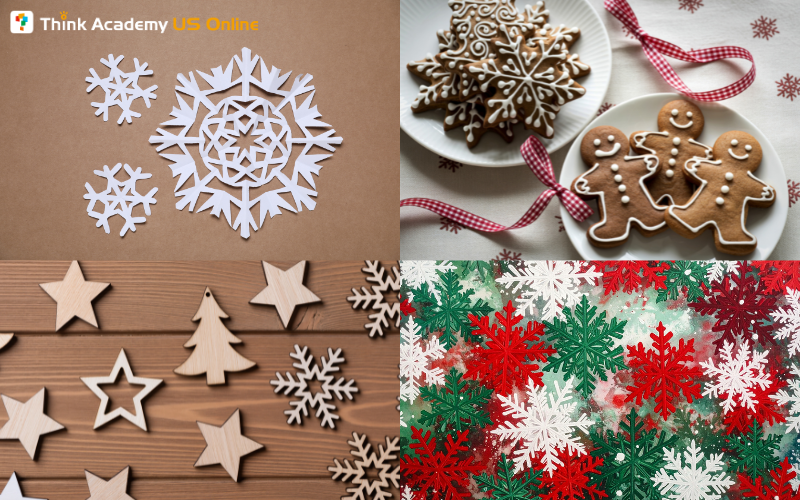
Paper Snowflakes (All Ages)
A timeless winter craft that teaches both reflectional symmetry and radial symmetry.
Kids fold paper several times, cut shapes along the edges, and unfold to reveal stunning designs. Every snowflake becomes a geometry lesson wrapped in creativity.
Symmetrical Gingerbread Decorating (Ages 4–12)
Children decorate one half of a gingerbread cookie and replicate the pattern on the other side—icing lines, sprinkles, candies, and colors.
This builds fine motor skills, attention to detail, and visual comparison.
Shape-Based Ornament Building (Ages 6–12)
Cut out geometric shapes—circles, triangles, hexagons, trapezoids—and challenge kids to create symmetrical ornaments or holiday cards.
Older children can explore multi-axis symmetry or rotational patterns.
Holiday Mirror Art With Pattern Blocks (Ages 5–12)
Using pattern blocks or printed templates, kids create symmetrical wreaths, dreidels, stars, Kwanzaa symbols, or winter animals.
This reinforces shape composition, tessellation, and early fraction reasoning.
These projects spark creativity while encouraging children to think mathematically—without even noticing they’re practicing math.
The Benefits of Seasonal Math Explorations
Holiday symmetry activities deepen children’s mathematical development in strong, research-backed ways.
Enhances Spatial Reasoning
Kids learn how shapes move, flip, rotate, and combine.
Spatial reasoning is strongly linked to later success in STEM subjects, especially geometry, engineering, and robotics.
Strengthens Visual Discrimination
Comparing one side to another helps kids recognize details, patterns, and structural relationships—skills essential for reading, math, and problem-solving.
Introduces Foundational Geometry Concepts
Through hands-on play, children absorb:
- lines of symmetry
- congruent shapes
- rotations and reflections
- attributes of 2D shapes
These experiences build the groundwork for more complex geometry in upper grades.
Builds Mathematical Confidence
When children successfully create symmetrical designs, they feel capable—boosting their confidence in tackling math tasks at school.
Encourages Persistence and Critical Thinking
Kids naturally revise, compare, adjust, and experiment as they build symmetrical creations.
This strengthens resilience and flexible thinking.
Holiday symmetry projects are more than crafts—they are low-pressure, high-value learning opportunities disguised as fun.
Cultivating a Love for Math Through Holidays (With Worksheets CTA)
Holiday symmetry activities help children see math as something beautiful, creative, and connected to the real world—not just something in a workbook. By weaving symmetry projects into your seasonal traditions, you nurture curiosity, strengthen foundational math skills, and make learning feel warm and joyful.
To continue supporting these early geometry skills, explore Think Academy Christmas Worksheets – 300 pages for each grade!
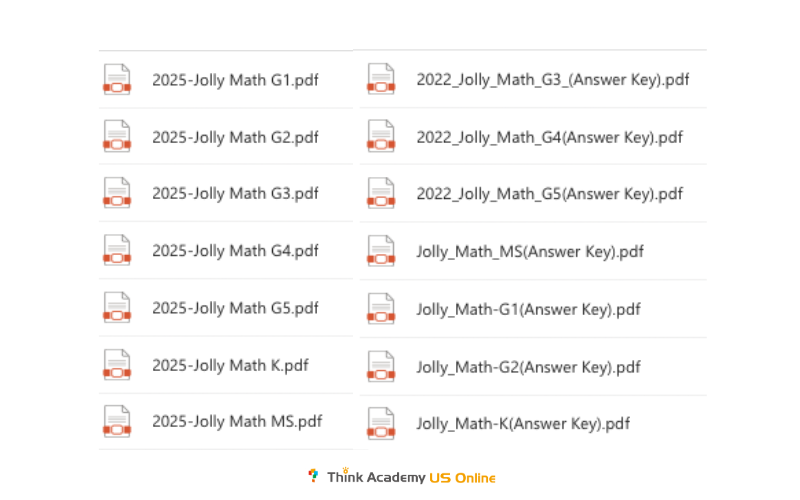
designed by expert educators to build symmetry recognition, spatial reasoning, pattern awareness, and number sense. These engaging worksheets fit naturally into daily routines, turning small moments into powerful learning habits. And with consistent, joyful practice, your child develops deeper confidence and a lifelong appreciation for math.
For long-term math skill development and confidence, visit and sign up for Think Academy’s free grade-level math worksheets to receive regular practice updates.
About Think Academy
Think Academy, part of TAL Education Group, helps K–12 students succeed in school today by building strong math foundations and critical thinking skills. At the same time, we focus on the bigger picture—developing learning ability, curiosity, and healthy study habits that inspire a lifelong love of learning. With expert teachers, proven methods, and innovative AI tools, we support every child’s journey from classroom confidence to long-term growth.
Check our math programs:
- Early Childhood — PreK
- Lower Elementary — Grades K–2
- Upper Elementary — Grades 3–5
- Middle School — Grades 6-10
Want more insights on math learning and parenting? Fill out the form on this page and subscribe to our newsletter for weekly tips and the latest resources.
Leave a Comment & Share Your Thoughts!

Share This Story, Choose Your Platform!
Related Posts










