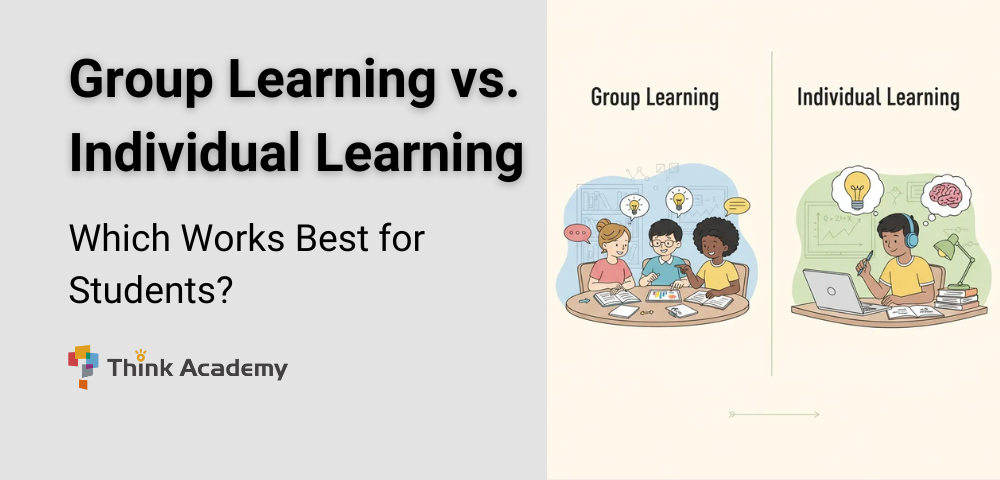
Group Learning vs. Individual Learning: Which Works Best for Students?
Every child learns differently — some thrive in lively discussions, while others prefer quiet, independent study. Both group learning and individual learning play important roles in a student’s academic and personal growth. Parents and educators often wonder which is more effective. The truth is, each method offers unique benefits, and the most successful learning environments blend both to build confident, adaptable learners.
The Power of Group Learning
Group learning gives students the opportunity to collaborate, share ideas, and solve problems together. In today’s world, where teamwork is vital, this approach develops more than knowledge — it strengthens essential life skills.
Key Benefits
- Collaboration and shared strengths: Students bring diverse abilities to group work. In a science project, for example, one child might handle research while another focuses on analysis. Together, they achieve more creative and complete results than they could alone.
- Improved communication: According to TeachThought, group work encourages students to explain ideas clearly, listen actively, and engage in respectful dialogue. These skills carry over into real-world contexts such as teamwork and leadership.
- Social and emotional development: Collaboration helps students learn empathy, patience, and conflict resolution — skills critical for success in relationships and future workplaces.
- Motivation and accountability: Students often feel more engaged when they know their contributions matter to the group’s success. Team-based responsibility motivates them to do their best.
Challenges
- Some students may rely too heavily on peers instead of contributing equally.
- Stronger personalities can dominate, while quieter students might withdraw.
- Teachers must balance participation to ensure all voices are heard and valued.

The Advantages of Individual Learning
Individual learning emphasizes independence, self-discipline, and reflection. It allows students to take ownership of their learning and move at a pace that fits their needs.
Key Benefits
- Learning at one’s own pace: Students can spend more time on difficult topics or move quickly through material they’ve mastered, ensuring a personalized learning experience.
- Deeper comprehension and reflection: Studying alone helps students focus deeply, think critically, and explore subjects in greater detail.
- Building discipline and independence: As Verywell Family explains, individual learning fosters self-discipline, self-reliance, and time management. Students learn to set goals and monitor their own progress—skills vital for long-term success.
- Reduced distractions: Some learners concentrate better in quiet, individualized settings where they can focus without peer interruptions.
Challenges
- Learning alone can sometimes lead to isolation or lower motivation without peer interaction.
- Students may miss opportunities to hear different perspectives or collaborate creatively.

Finding Balance in K-12 Education
The most effective classrooms combine both group and individual learning to create well-rounded experiences.
Ways to Balance Both
- Sequential integration: Start with individual study to build knowledge, then shift to group work for application and discussion. For example, students might first practice math problems independently, then collaborate on solving real-world challenges.
- Blended assignments: Mix solo and collaborative elements in projects. A research report could involve individual writing followed by a team presentation.
- Student choice: Allow students to choose how they want to complete certain activities — alone or in groups. This autonomy increases engagement and helps them recognize their learning preferences.
Why Balance Works
This balanced model encourages independence while nurturing collaboration. Students learn when to rely on themselves and when to work as a team — a skill set that prepares them for both academic and real-world challenges.
Implications for Parents and Teachers
Understanding these two learning styles helps families and educators provide more effective support.
For Parents
- Encourage both independent reading and small group study sessions at home.
- Reinforce time management and goal-setting through personal study routines.
- Support group-based extracurriculars like science clubs, debate teams, or music ensembles to build social learning skills.
For Teachers
- Create flexible lesson plans that alternate between solo tasks and collaborative projects.
- Observe how each student performs in different settings and tailor instruction accordingly.
- Use group activities to strengthen communication and leadership, while using independent work to develop accountability and focus.
Conclusion: Complementary Approaches for Holistic Learning
The debate between group learning and individual learning overlooks an important truth — both are essential. Group learning fosters teamwork, empathy, and communication. Individual learning builds independence, focus, and perseverance.
When used together, they complement one another and prepare students not just for exams, but for life. The key for parents and educators is to embrace balance — helping students grow into independent thinkers who can also collaborate effectively in any environment.
About Think Academy
Think Academy, part of TAL Education Group, helps K–12 students succeed in school today by building strong math foundations and critical thinking skills. At the same time, we focus on the bigger picture—developing learning ability, curiosity, and healthy study habits that inspire a lifelong love of learning. With expert teachers, proven methods, and innovative AI tools, we support every child’s journey from classroom confidence to long-term growth.
Want more insights on math learning and parenting? Subscribe to our newsletter for weekly tips and the latest resources.
Leave a Comment & Share Your Thoughts!
Share This Story, Choose Your Platform!
Related Posts