Grace Hopper and COBOL: How One Tech Pioneer Changed Computers
Grace Hopper was not only a pioneering computer scientist—she fundamentally changed how humans interact with computers. Her work helped transform computers from machines understood only by mathematicians into tools that ordinary people and organizations could use. For parents, her story offers a powerful example of how mathematics, logic, and creative thinking shape the modern world.
Understanding Grace Hopper’s contributions helps children see that innovation is not about speed or memorization, but about asking better questions and rethinking assumptions.
Who Was Grace Hopper?
Grace Hopper was born in New York City in 1906. From an early age, she showed strong curiosity about how things worked—an instinct that later defined her career. She earned a Ph.D. in mathematics from Yale University in 1934, an extraordinary achievement at a time when very few women pursued advanced degrees in math or science.
During World War II, Hopper joined the United States Navy, where she began working with some of the earliest computers ever built. Her background in mathematics allowed her to connect abstract theory with real-world problem solving, a skill that became central to her later breakthroughs.
Her Key Contributions to Computing
One of Grace Hopper’s earliest and most formative roles was her work on the Harvard Mark I, one of the first large-scale computing machines used for military and scientific calculations. The Mark I was not programmable in the modern sense; instructions had to be carefully sequenced, and errors were costly, time-consuming, and difficult to trace.
This environment shaped Hopper’s approach to computing. She recognized early that computers were only as powerful as humans’ ability to communicate with them clearly and systematically. Programming the Mark I required rigorous logical structure—breaking problems into precise steps and anticipating how the machine would execute each instruction. These experiences laid the groundwork for Hopper’s later insistence on clarity, structure, and reliability in software design.
During this period, Hopper’s team documented a malfunction caused by a moth trapped in a relay. While often retold humorously, the incident captured a serious engineering principle: complex systems fail in subtle ways, and solving those failures requires careful observation and methodical reasoning. The term “debugging” came to represent this process of identifying, isolating, and correcting errors—a concept that remains central to modern software engineering, from small applications to global systems.
Hopper’s most transformative contribution, however, was conceptual rather than mechanical. At a time when programming relied almost entirely on low-level, symbolic instructions tied closely to hardware, she proposed a radical idea: computers should be programmed using languages closer to human thought and natural language. Her argument was that this shift would reduce errors, increase productivity, and allow computers to be used beyond a small group of specialists.
This vision led directly to the development of COBOL (Common Business-Oriented Language).

COBOL Explained Simply: How It Works and Why It’s Still Used Today
When Grace Hopper helped develop COBOL, her goal was not just to create another programming language. She wanted computers to be understandable, reliable, and useful for everyday work, especially in large organizations that depended on accuracy and consistency.
What Makes COBOL Different from Other Programming Languages?
COBOL was designed to read almost like plain English. Instead of short symbols or cryptic commands, COBOL programs use full words and clear structure. This made programs easier to read, review, and maintain, even by people who were not trained computer scientists.
At a basic level, COBOL follows a few simple principles:
- Programs are written in clearly defined sections, each serving a specific purpose, such as describing data or giving instructions
- Instructions read like sentences that explain exactly what the computer should do
- Data is carefully defined before any calculations happen, so the computer always knows what kind of information it is working with
For example, instead of writing complex symbols, a COBOL program might say something like: “ADD the total price TO the customer balance.” This clarity helped reduce errors and made programs much easier to fix when problems occurred.
What Is COBOL Used For Today?
Although COBOL was created decades ago, it is still widely used because it is extremely stable and reliable. Many important systems were built with COBOL and continue to operate successfully today.
COBOL is commonly used in banking systems that manage account balances and transactions, payroll systems that ensure employees are paid correctly and on time, government systems that process taxes and public services, and insurance systems that manage policies and claims.
Large institutions continue to rely on COBOL because these systems handle enormous amounts of data, must operate continuously without failure, and are designed to last for decades. Replacing them would be costly and risky, which is why COBOL remains a critical part of modern infrastructure.
Why COBOL Still Matters for Learning Today
COBOL introduced ideas that are still central to modern computing. It emphasized careful planning before coding, precise handling of data, and writing programs that other people can understand. These principles remain essential in today’s software engineering, data systems, and even artificial intelligence development.
Grace Hopper’s belief was simple but powerful: if humans can clearly understand the program, computers become safer, more reliable, and more useful. That idea continues to shape how technology is built today.
What Children Can Learn from COBOL
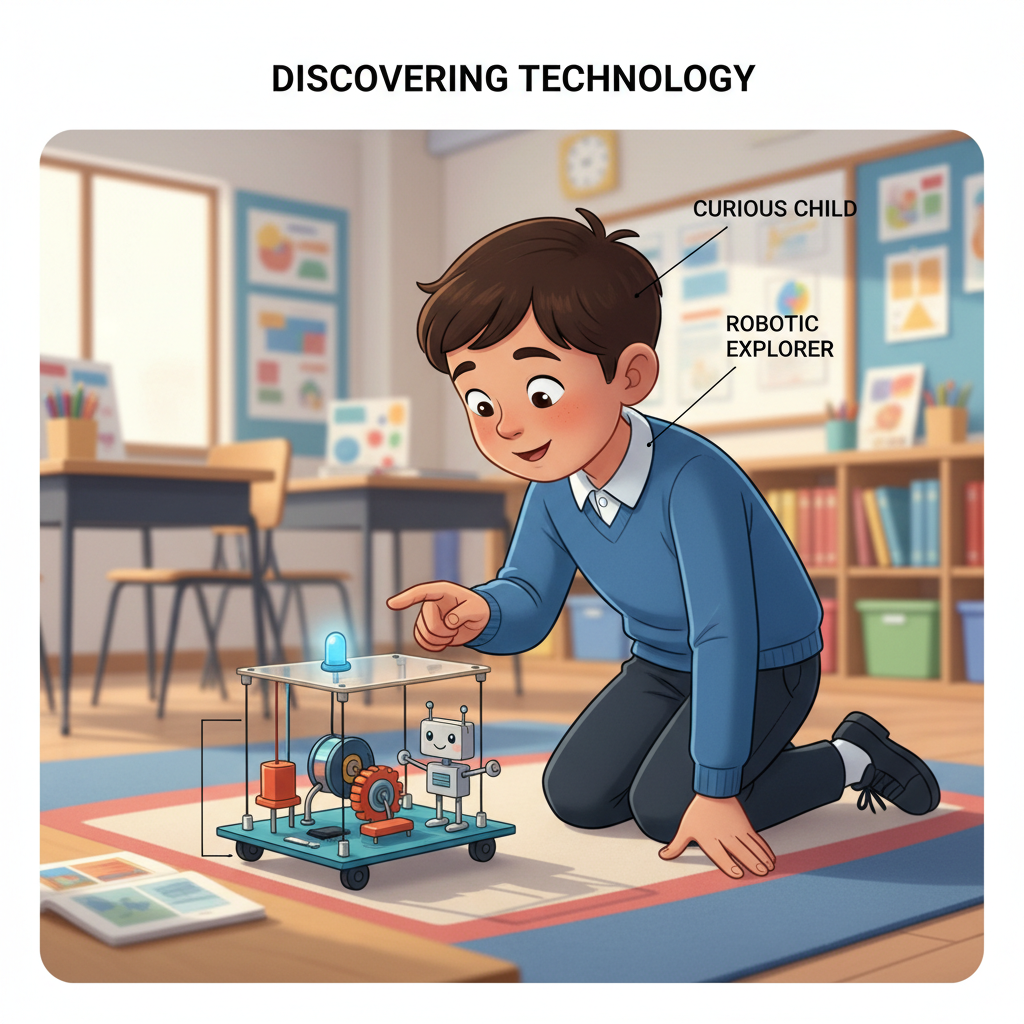
For children, COBOL’s story reinforces an important lesson: good technology starts with clear thinking and clear communication, not unnecessary complexity.
COBOL shows that writing things clearly prevents mistakes, strong structure makes systems reliable, and technology should serve people rather than confuse them. These lessons apply not only to programming, but also to math, problem-solving, and everyday reasoning—the same skills children develop when they learn to explain their thinking step by step.
Final Takeaway for Parents
Grace Hopper’s legacy extends far beyond computers. She demonstrates how curiosity, mathematical thinking, and clear reasoning can reshape entire industries. Her work reminds us that today’s foundational skills—logical reasoning, structured problem solving, and precise communication—are the same skills that prepare children for future careers in technology, data science, and beyond.
To help children begin developing these abilities, families can start with simple, consistent practice. Downloading and working through free math and logic worksheets together provides an accessible way to strengthen number sense, reasoning, and problem-solving habits at home—building the same foundations that supported Grace Hopper’s groundbreaking work.
About Think Academy
Think Academy, part of TAL Education Group, helps K–12 students succeed in school today by building strong math foundations and critical thinking skills. At the same time, we focus on the bigger picture—developing learning ability, curiosity, and healthy study habits that inspire a lifelong love of learning. With expert teachers, proven methods, and innovative AI tools, we support every child’s journey from classroom confidence to long-term growth.
Check our math programs:
- Early Childhood — PreK
- Lower Elementary — Grades K–2
- Upper Elementary — Grades 3–5
- Middle School — Advanced math topics, including Algebra 1, Algebra 2, and Geometry
Want more insights on math learning and parenting? Fill out the form on this page and subscribe to our newsletter for weekly tips and the latest resources.
Leave a Comment & Share Your Thoughts!

Share This Story, Choose Your Platform!
Related Posts










