Christmas Ornament Math Activities for Kids at Home
Christmas ornament math activities offer one of the easiest ways to blend festive fun with meaningful real-world math practice at home. Many parents want holiday downtime to stay productive without feeling like extra homework, and these simple, hands-on Christmas math projects help children stay engaged, build number sense, and enjoy learning throughout the season. With just a box of ornaments, your child can practice counting, patterns, geometry, measurement, symmetry, and even data collection—while staying immersed in the joy of the holidays.
Common Types of Christmas Ornaments
Christmas ornaments come in many forms, making them ideal for sorting, counting, measuring, and pattern-building activities. Below are some of the most popular and easily recognizable types families use at home.
By Shape
- Ball ornaments – Classic round ornaments, perfect for counting, comparing size, and measuring circumference
- Star ornaments – Often used at the top of trees; great for discussing symmetry
- Bell ornaments – Common holiday shape with clear geometric outlines
- Heart ornaments – Useful for shape recognition and sorting
- Snowflake ornaments – Excellent examples of rotational and reflective symmetry
By Material
- Glass ornaments – Smooth, shiny, and typically spherical
- Plastic ornaments – Lightweight and child-friendly
- Wooden ornaments – Often flat shapes, ideal for pattern work
- Metal ornaments – Durable and useful for weight comparison
- Fabric or felt ornaments – Soft textures, good for sensory-based learning
By Theme
- Holiday characters – Santa, snowmen, reindeer
- Nature-inspired ornaments – Pinecones, berries, leaves
- Candy and food ornaments – Candy canes, cookies, gingerbread
- Animal ornaments – Birds, bears, penguins
- Personalized ornaments – Names, years, or family traditions
These variations make ornaments especially useful for math projects involving classification, data collection, estimation, and graphing.
What Are Christmas Ornament Math Activities?
Christmas ornament math activities use holiday decorations as learning tools to teach core mathematical concepts. These festive math games make abstract ideas more concrete, especially for children ages 4–12 who learn best through hands-on exploration.
Children can practice:
- number sense
- sorting and classifying
- pattern recognition
- basic geometry
- measurement
- symmetry
- early statistics
Because the activities feel like play, kids stay engaged even when school is out.
Expanding Math Skills Through Holiday Projects
Holiday decorations offer more than seasonal fun—they provide meaningful opportunities for hands-on math learning. By turning familiar Christmas ornaments into learning tools, families can help children practice essential math skills in a relaxed, low-pressure setting that feels natural and enjoyable.
Christmas Math Activities for Ages 4–7
Building early math foundations through play
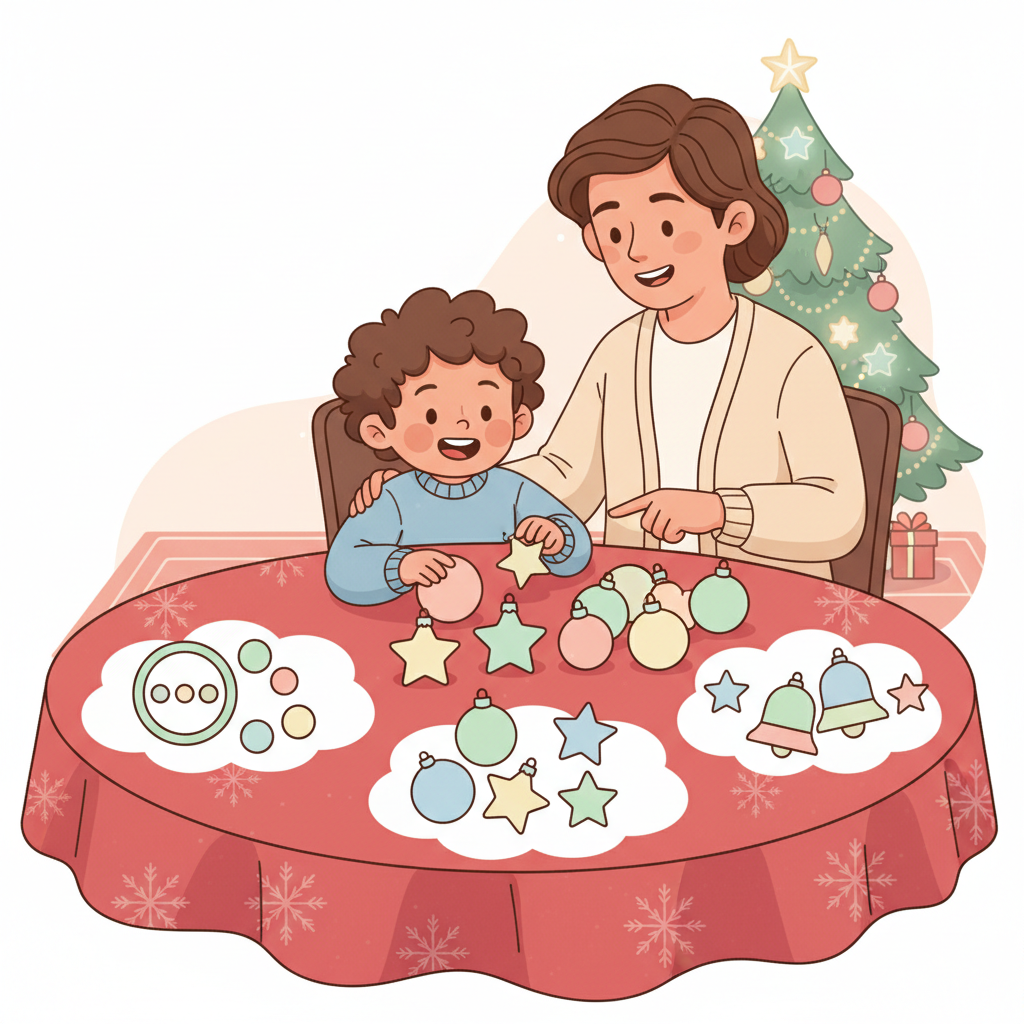
For younger children, ornament-based activities support early number sense, sorting, and pattern recognition. Because these tasks involve bright colors and physical objects, children engage instinctively without needing formal instruction.
Simple activities include:
- Counting ornaments by color, shape, or type
- Sorting decorations into categories such as circles, stars, bells, or trees
- Grouping ornaments by size, from smallest to largest
- Creating repeating patterns, such as ball–star–ball–star
- Matching ornaments to numbers or solving simple addition problems
These activities strengthen foundational skills while encouraging children to explain their thinking, an important step toward mathematical reasoning.
Christmas Math Activities for Ages 8–12
Applying math concepts through measurement, geometry, and data
Older children benefit from activities that introduce structure, estimation, and analysis. Ornament-based projects allow them to explore abstract concepts in concrete, visual ways.
More advanced challenges include:
- Measuring the circumference of spherical ornaments using string
- Comparing measurements to identify largest and smallest objects
- Designing symmetrical garlands or balanced sections of a tree
- Predicting the next element in a complex ornament pattern
- Creating bar graphs based on ornament color, shape, or size
- Estimating how many ornaments fit on a specific section of the tree
These tasks connect math to real decision-making and problem-solving, reinforcing skills taught in upper elementary classrooms.
Why Holiday Math Projects Are So Effective
They make math enjoyable and pressure-free
When math is woven into decorating and play, children approach it with curiosity rather than anxiety. Mistakes become part of exploration, helping kids build confidence and resilience without fear of “getting it wrong.”
They reinforce essential school math skills
Through ornament-based projects, children naturally practice:
- Counting and skip-counting
- Addition, subtraction, and comparison
- Measurement of size, distance, and circumference
- Shape recognition and basic geometry
- Pattern identification and extension
Because these concepts are experienced physically and visually, they are more likely to stick.
They build critical thinking and creativity
Holiday math projects go beyond basic computation. Children learn to:
- Analyze similarities and differences
- Plan symmetrical or balanced designs
- Make predictions and test them
- Solve practical problems, such as spacing and quantity
- Explore multiple solutions to the same challenge
This blend of reasoning and creativity supports higher-order thinking emphasized in modern K–12 learning standards.
They connect math to real-life applications
One of the most common questions children ask is, “When will I use this?” Ornament math provides a clear answer. Sorting, measuring, estimating, and organizing decorations show math in action, reinforcing its role as a practical, everyday tool.
They strengthen family learning and bonding
Holiday math projects fit naturally into family traditions, allowing parents and children to learn together while:
- Decorating the Christmas tree
- Preparing garlands or wreaths
- Organizing ornaments by size, shape, or color
- Designing displays collaboratively
These shared experiences help children associate math with warmth, fun, and meaningful family time—an emotional connection that supports long-term motivation and confidence.

Sustaining Learning Through Holiday Traditions
Christmas ornament math activities show children that learning can be joyful, creative, and deeply connected to the world around them. By turning simple decorations into hands-on challenges, families reinforce a wide range of math concepts—counting, geometry, statistics, symmetry, and more—in a way that feels like play.
Make these festive math games part of your annual traditions to:
- reduce math anxiety
- strengthen long-term math understanding
- build consistent at-home learning habits
- inspire a lifelong love for numbers
A single box of ornaments can spark powerful math learning all season long.
Christmas ornament math activities show how easy it is to turn holiday moments into meaningful learning. If you’d like more fun, structured ways to support your child’s growth, download Think Academy’s Christmas Worksheets – Jolly Math, including 300 pages for each grade! They’re designed by expert teachers to reinforce core skills, build confidence, and keep kids learning all year long.
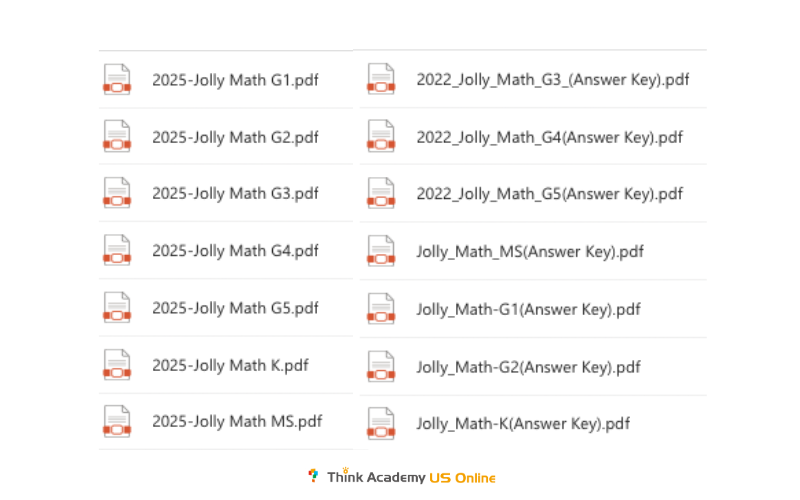
For long-term math skill development and confidence, visit and sign up for Think Academy’s free grade-level math worksheets to receive regular practice updates.
About Think Academy
Think Academy, part of TAL Education Group, helps K–12 students succeed in school today by building strong math foundations and critical thinking skills. At the same time, we focus on the bigger picture—developing learning ability, curiosity, and healthy study habits that inspire a lifelong love of learning. With expert teachers, proven methods, and innovative AI tools, we support every child’s journey from classroom confidence to long-term growth.
Check our math programs:
- Early Childhood — PreK
- Lower Elementary — Grades K–2
- Upper Elementary — Grades 3–5
- Middle School — Grades 6-10
Want more insights on math learning and parenting? Fill out the form on this page and subscribe to our newsletter for weekly tips and the latest resources.
Leave a Comment & Share Your Thoughts!

Share This Story, Choose Your Platform!
Related Posts










