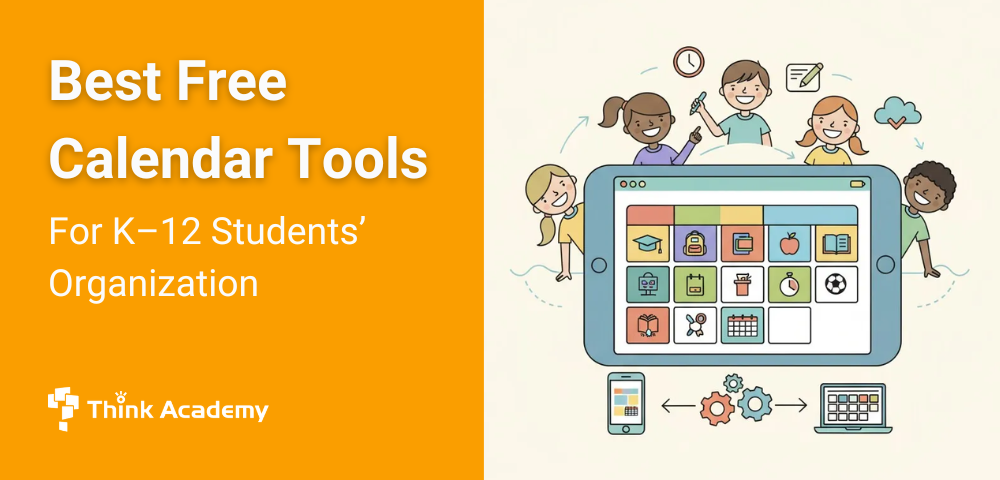
Best Free Calendar Tools for K–12 Students’ Organization
Today’s K–12 students face increasing academic pressure — juggling assignments, tests, activities, and family commitments. Without strong organizational skills, it’s easy to feel overwhelmed. In the digital age, calendar apps for students are proving to be essential tools. They not only help manage time effectively but also teach lifelong self-management and responsibility.

Why Organizational Skills Matter for K–12 Students
Organizational skills are more than just keeping track of homework — they form the backbone of a student’s academic and personal success. Students who learn how to prioritize tasks, break projects into smaller steps, and balance study with activities experience:
- Improved academic performance
- Lower stress levels
- More effective use of study time
Research published by the U.S. Department of Education’s ERIC database shows that strong study skills and organizational methods directly improve student achievement and reduce academic struggles For parents, encouraging these skills early can pay off not only in grades but also in healthier routines.
How Calendar Apps Build Organizational Skills
Digital calendar apps give students a clear structure for their time. Instead of relying on memory, assignments, exams, and activities all stay in one place.
Key benefits:
- Reminders: Alerts for tests, projects, or study sessions.
- Color-coding: Separate school, sports, family, or hobbies.
- Time blocking: Practice scheduling focused study periods.
- Syncing: Keep students and parents aligned across devices.
Research in the Journal of Educational Psychology (APA) found that students who feel more control over their time achieve better performance and lower stress (ResearchGate). A 31-year review also links poor time management to higher stress and academic struggles (PMC).
In short, a simple calendar app is one of the easiest ways to build time management skills for both school success and personal balance.

Real-World Example
Consider Aiden, a ninth grader balancing school, soccer practice, and music lessons. Before using a calendar app, he often forgot assignments and felt anxious before exams. Once his parents introduced him to Google Calendar with color-coded reminders, he began blocking time for homework and study. Within two months, his teachers noticed improvements in both performance and classroom engagement.
This shows how digital calendars can support not only school success but also a student’s overall confidence and well-being.
Best Free Calendar Apps for Students
Google Calendar
Google Calendar is one of the most widely used free tools. It integrates seamlessly with Google Docs, Classroom, and Gmail, making it perfect for students already using Google Workspace. Features include:
- Multiple calendars (school, personal, extracurricular)
- Reminders via email, push notifications, or SMS
- Shared calendars for group projects
Microsoft Outlook Calendar
For families and schools using Microsoft Office 365, Outlook Calendar is a strong choice. It offers:
- Task management and event scheduling
- Sharing options with classmates or teachers
- Syncing across all Microsoft devices and apps
TickTick
TickTick combines calendar features with robust task management, making it ideal for older students with complex schedules. Highlights include:
- Repeating tasks and priority settings
- Tags for organizing activities
- A clean, easy-to-use design
TimeTree
TimeTree is built for collaboration. Families can create shared calendars so parents and students stay aligned. Popular features include:
- Group calendar sharing for activities
- Commenting on scheduled events
- Color-coding by family member
Building Lifelong Skills Through Calendar Apps
Beyond helping students finish homework on time, calendar apps for K–12 students build habits that last into adulthood. They teach:
- Accountability: Students take charge of their schedule.
- Planning ahead: Learning to break big projects into manageable steps.
- Balance: Making time for both academic and personal growth.
By mastering these skills, students reduce last-minute stress and learn to value their time. Parents who encourage early adoption of digital calendars can give their children an advantage in school and beyond.
Conclusion
Strong organizational skills are key to thriving in today’s demanding academic environment. With the help of free calendar apps like Google Calendar, Outlook, TickTick, and TimeTree, K–12 students can stay on top of assignments, manage activities, and build habits that prepare them for lifelong success.
For families, the message is clear: start early, support your child’s time management, and use digital tools to make organization simple and effective.
Recommended Readings
About Think Academy
Think Academy, part of TAL Education Group, helps K–12 students succeed in school today by building strong math foundations and critical thinking skills. At the same time, we focus on the bigger picture—developing learning ability, curiosity, and healthy study habits that inspire a lifelong love of learning. With expert teachers, proven methods, and innovative AI tools, we support every child’s journey from classroom confidence to long-term growth.
Want more insights on math learning and parenting? Subscribe to our newsletter for weekly tips and the latest resources.
Leave a Comment & Share Your Thoughts!
Share This Story, Choose Your Platform!
Related Posts