Anatomy & Physiology for Kids: How the Human Body Works
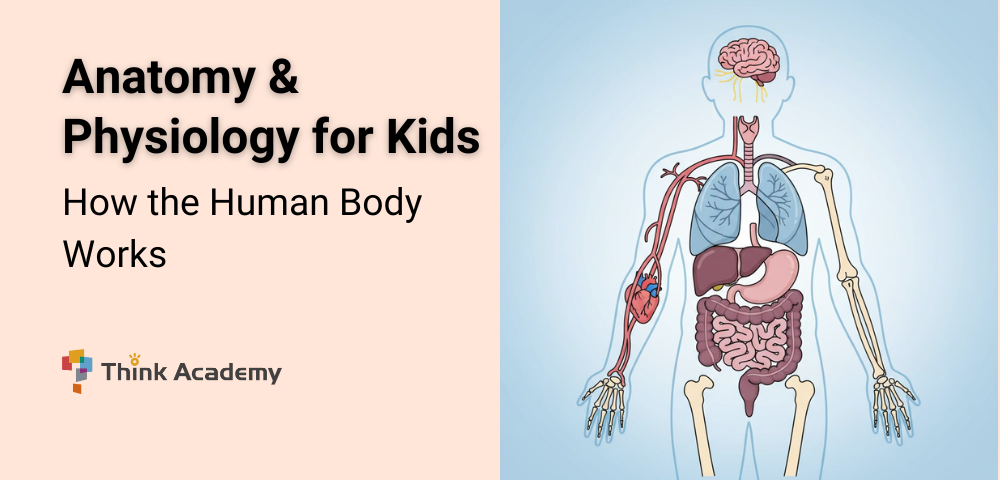
Anatomy & Physiology form the foundation of life science by explaining what the human body is made of and how its parts function together. For children, learning these concepts early supports scientific literacy, health awareness, and logical thinking. Rather than treating the human body as an abstract topic, anatomy and physiology help children connect everyday experiences—movement, breathing, eating, and sensing—to underlying biological systems.
What Are Anatomy and Physiology?
Anatomy focuses on the structure of the body. It examines organs, tissues, bones, and their locations.
Physiology explains how those structures work, such as how the heart pumps blood or how muscles contract to create movement.
These two disciplines are closely linked. Understanding structure without function provides an incomplete picture, and studying function requires knowledge of structure. Together, they form the basis for biology, medicine, and health science.
Anatomy studies the form of living organisms, while physiology examines the processes that keep them alive. Introducing these ideas in age-appropriate ways helps children develop accurate scientific understanding from an early stage.
Why Early Anatomy & Physiology Learning Is Important
Learning about the human body during early and elementary years offers several long-term benefits:
- Scientific understanding
Children learn to observe, compare, and explain cause-and-effect relationships, such as how exercise affects breathing or why bones protect vital organs. - Health literacy
Understanding body systems helps children make sense of nutrition, sleep, hygiene, and physical activity. - Reduced anxiety about health topics
Basic biological knowledge can make doctor visits or illnesses less intimidating by replacing uncertainty with understanding. - STEM readiness
Anatomy and physiology introduce core ideas later used in biology, sports science, and medical fields.
This knowledge supports both academic growth and everyday decision-making.

Structured Anatomy & Physiology Activities for Children (Ages 4–12)
Hands-on activities are one of the most effective ways to make anatomy and physiology concrete and memorable. Below are structured activities that can be adapted for home or classroom use.
Human Body Systems Journal
Children draw one body system per page, label major parts, and write one or two sentences describing function.
Skills developed: observation, vocabulary, systems thinking
Build-and-Model with Playdough
Children sculpt organs using different colors and discuss where each organ is located and what it does.
Skills developed: spatial reasoning, structural understanding
Five Senses Exploration
Children identify objects using touch, smell, or sound, then connect each sense to the correct organ.
Skills developed: sensory awareness, nervous system basics
Movement and Muscles Observation
Children jump, stretch, or bend while identifying which muscles and bones are involved.
Skills developed: functional anatomy, cause-and-effect reasoning
Recommended Books and Educational Channels for Learning the Human Body
High-quality books and media help reinforce anatomy and physiology concepts with accurate visuals and age-appropriate explanations. The following resources are widely used in schools and libraries.
Educational Reference & Illustrated Books
- DKfindout! Human Body – A kid-friendly, illustrated guide that explains organs, systems, and processes in accessible language for ages ~6–9.
- Knowledge Encyclopedia Human Body! – Comprehensive visual reference with high-quality photographs and facts suitable for elementary readers.
- Human Body – Informational overview with infographics and engaging explanations.
Books Designed for Early Learners
- My First Body Book – A brightly illustrated book to help young children identify body parts and learn basic body concepts together with an adult.
- My First Body (board book) – A sturdy board book ideal for toddlers and preschoolers exploring the human body.
- Mi Primer Libro del Cuerpo/My First Body Board Book – A bilingual board book that introduces body vocabulary (English/Spanish), useful for language and science learning.
Rhyming & Story-Based Introduction
- Vintage 2003 Inside Your Outside Dr Seuss – Classic Cat in the Hat title that introduces basic body concepts in rhyme and fun narrative form

Conclusion
An age-appropriate introduction to Anatomy & Physiology helps children understand how their bodies are structured and how they function in daily life. By combining clear explanations, hands-on activities, and trusted books and educational media, families can support meaningful science learning without oversimplification. This foundational knowledge strengthens scientific thinking, supports health awareness, and prepares children for future STEM learning.
For families looking to support long-term STEM readiness,
Think Academy’s math worksheets
can complement life science learning by strengthening the skills that science relies on—logical reasoning, pattern recognition, data interpretation, and problem-solving. While the worksheets focus on mathematics, they help children build the quantitative thinking and structured reasoning needed across STEM subjects, including biology and health science.
When paired with reading and hands-on exploration, consistent math practice supports deeper understanding and more confident learning as children progress through integrated STEM topics.
About Think Academy
Think Academy, part of TAL Education Group, helps K–12 students succeed in school today by building strong math foundations and critical thinking skills. At the same time, we focus on the bigger picture—developing learning ability, curiosity, and healthy study habits that inspire a lifelong love of learning. With expert teachers, proven methods, and innovative AI tools, we support every child’s journey from classroom confidence to long-term growth.
Check our math programs:
- Early Childhood — PreK
- Lower Elementary — Grades K–2
- Upper Elementary — Grades 3–5
- Middle School — Grades 6-10
Want more insights on math learning and parenting? Fill out the form on this page and subscribe to our newsletter for weekly tips and the latest resources.
Leave a Comment & Share Your Thoughts!
Share This Story, Choose Your Platform!
Related Posts