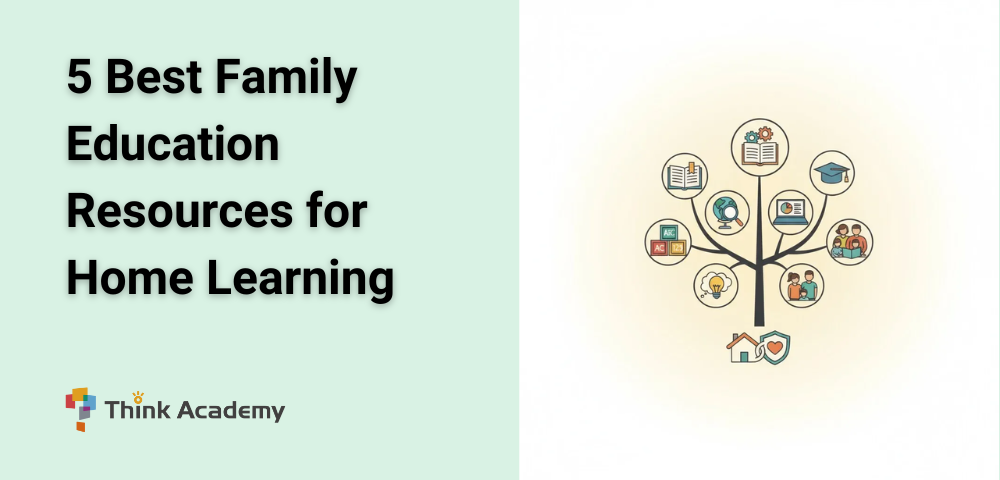
5 Best Family Education Resources for Home Learning
Supporting your child’s education doesn’t just happen in the classroom—it also grows through the experiences, conversations, and resources families bring into everyday life. With the right academic tools, parents can turn family time into valuable learning moments.
Here are five essential resources every family can use to create a strong and engaging home learning environment.
1. Educational Books: Building Curiosity and Knowledge
Books remain the foundation of lifelong learning. They spark imagination, expand vocabulary, and teach children to think critically.
Parents can create a daily reading routine—perhaps 20 to 30 minutes before bedtime. Choose a mix of fiction and nonfiction. A story like The Wonderful Wizard of Oz can nurture creativity, while science or history books build understanding of the world.
As noted by Britannica, children’s literature plays a crucial role in developing empathy and curiosity—skills that benefit learning across all subjects.
Tip: Let your child choose one book each week to read together. This small decision fosters independence and ownership of learning.

2. Online Learning Platforms: Flexible and Reliable Learning Support
The internet offers a wealth of high-quality educational content, perfect for supplementing school lessons.
Platforms like Khan Academy provide free, expert-led lessons in math, science, and more. Parents can set aside two to three study sessions per week where their child explores topics aligned with schoolwork or personal interests.
Online learning also builds self-discipline and confidence—important traits for independent study later in life.
Tip: Track progress using built-in dashboards. Seeing improvement helps children stay motivated.
3. Educational Apps: Learning Through Play
Apps make education interactive and fun. Tools like Duolingo for language learning and Prodigy for math turn lessons into games, making practice feel rewarding.
Encourage short, consistent use—around 20 to 30 minutes a day—to balance fun with focus.
Tip: Use app time as a “reward” after homework or chores to reinforce positive habits while keeping learning consistent.

4. Museums and Libraries: Real-World Classrooms
Some of the best lessons happen outside the home. Museums and libraries provide hands-on, sensory-rich experiences that help children connect what they’ve learned to real life.
Regular trips—whether to a science museum, local library, or art exhibit—encourage curiosity and critical thinking. They also promote family bonding through shared discovery.
Tip: Before your visit, choose one topic (like space or ancient history) and encourage your child to find one interesting fact to share afterward.
5. Educational Videos: Bringing Ideas to Life
Visual learning is a powerful way to explain abstract concepts. Short videos help students visualize complex topics and retain information better.
YouTube channels such as TED-Ed and the Think Academy YouTube Channel offer engaging, educational videos on math, science, history, and more.
Parents can add a short video to daily routines—perhaps during breakfast or before homework—as a fun, educational warm-up.
Tip: Watch together and ask open-ended questions (“What surprised you most?”) to spark discussion and deeper learning.
Final Thoughts
Family education thrives when academic resources are woven into everyday life. Books inspire imagination, online lessons reinforce skills, and museums, apps, and videos make learning interactive.
By creating a structured yet flexible routine around these resources, families can turn ordinary moments into meaningful educational opportunities—helping children grow curious, confident, and ready for lifelong learning.
About Think Academy
Think Academy, part of TAL Education Group, helps K–12 students succeed in school today by building strong math foundations and critical thinking skills. At the same time, we focus on the bigger picture—developing learning ability, curiosity, and healthy study habits that inspire a lifelong love of learning. With expert teachers, proven methods, and innovative AI tools, we support every child’s journey from classroom confidence to long-term growth.
Want more insights on math learning and parenting? Subscribe to our newsletter for weekly tips and the latest resources.
Leave a Comment & Share Your Thoughts!
Share This Story, Choose Your Platform!
Related Posts