The Ultimate Guide to Math Placement Test: What It Tests & How to Prep
This guide is for parents of students transitioning from Grade 5 to Grade 6 or Grade 6 to Grade 7. It explains what is math placement test, how it can affect your child’s learning path, and how to prepare effectively. Think Academy offers a high-efficiency short-term learning camp to help students prepare for math placement test.
What Is Math Placement Test?
What Do Math Placement Tests Evaluate?
Math placement tests are different from regular unit tests. Their main purpose is to evaluate three key aspects of a student’s learning:
- Test Level (Current Skill): Assess whether your child has mastered the Common Core standards for their current grade level.
- Growth Curve (Learning Potential): For example, tests like MAP provide RIT scores and Percentiles, evaluating whether your child is learning at a faster pace than their peers.
- Readiness (Future Learning Ability): Predict your child’s readiness for the next grade and even the next few years, especially for those aiming for accelerated classes.
The Significance of Math Placement Tests
Math placement tests are crucial for middle school students as they determine which math track a student will follow. The results impact not only the current year but also future math courses, setting the stage for high school and even college-level mathematics.
Types of Math Placement Tests
Middle schools rarely rely on a single data point to decide a student’s future. Instead, most districts use a “Multiple Measures” approach (often called a Placement Matrix) to ensure accuracy.
Generally, the assessments fall into four main categories:
1. Third-Party Computer Adaptive Tests (Achievement Tests)
This is the most common layer of testing. It measures what the student currently knows.
- Examples: NWEA MAP Growth, Star Math, i-Ready Diagnostic.
- How it works: These tests are adaptive. If a student answers a question correctly, the next one gets harder (potentially showing 7th or 8th-grade level problems). This allows the school to pinpoint exactly where a student’s knowledge ends and where their “instructional gap” begins.
Learn more about NWEA MAP Growth, Star Math, i-Ready Diagnostic for first-timer:
- i-Ready FAQs: Complete Guide for First-Time Takers
- What Is the MAP Test? A Parent-Friendly Guide to MAP Growth
- i-Ready, MAP & STAR: Which Test Is Best for Your Child?
2. State Standardized Assessments
Before a student is even invited to take a specific placement test, schools often look at their previous year’s state test scores as a preliminary filter.
- Examples: CAASPP (California), SBAC (WA, CT, OR), STAAR (TX), NY State Tests, or FSA (FL).
- The Impact: Scoring “Exceeded Standards” on exams like the CAASPP is often the initial requirement to be considered for the Accelerated Math track.
Learn more about CAASPP: CAASPP Results: Score Ranges, Levels & Percentiles
3. District-Specific Exam
Different districts often create their own rigorous, paper-based final exam for the course the student wants to skip. Students usually need a very high score (often 85% or 90%+) on this specific exam to prove mastery of the skipped material.
4. Grades & Teacher Recommendation
- Course Grades: Consistent “A” grades in the current math class are almost always a prerequisite.
- Teacher Input: Teachers evaluate Mathematical Practices—such as persistence, attention to detail, and the ability to explain their reasoning. A strong recommendation from a teacher can often boost a student who is on the borderline of the cutoff score.
Impact of Math Placement Test Results
Placement exam results significantly influence your child’s academic path. Here’s why parents should care: the U.S. education system widely uses a Math Tracking System in middle school, which categorizes students into different tracks based on their placement exam results.
Understanding Math Tracking in Middle School
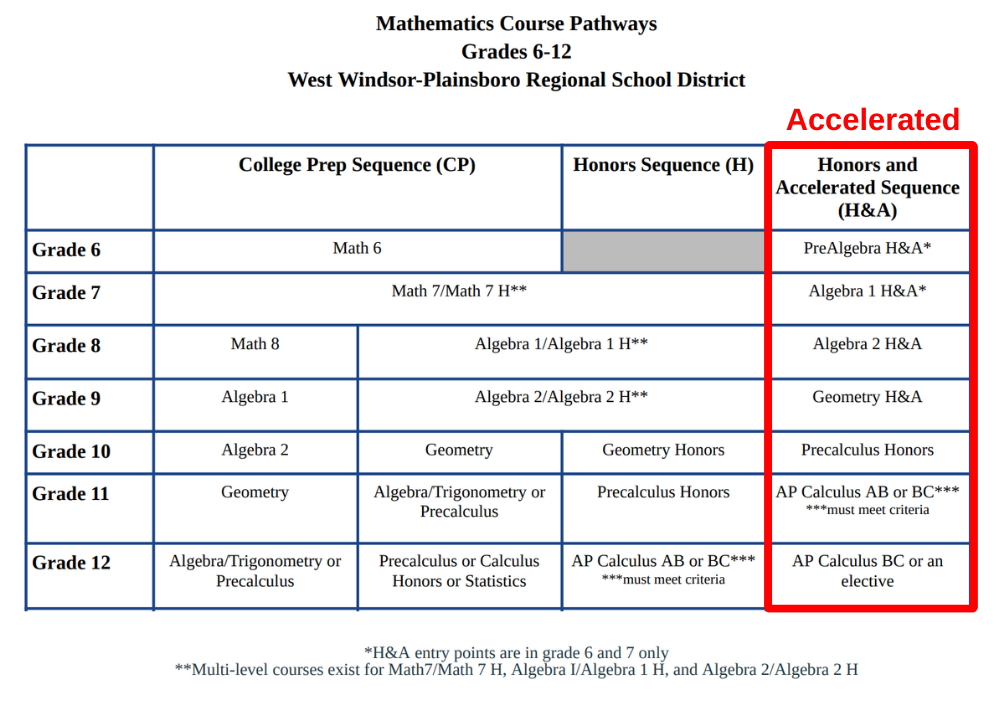
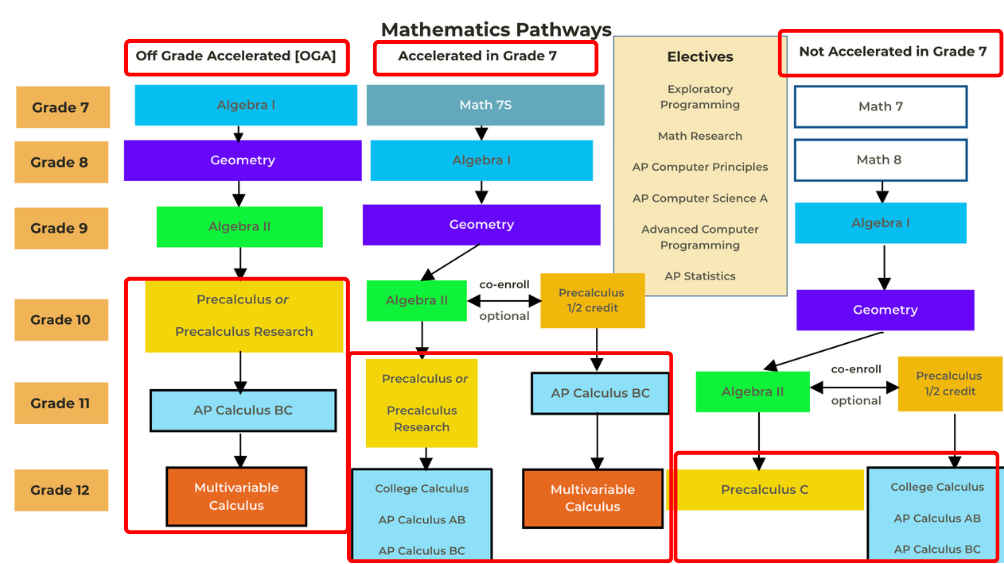
Middle school students are typically grouped into three math tracks:
- Regular / On-Level: Students follow a standard-paced curriculum. In Grade 6, they learn Math 6, and in Grade 9, they begin Algebra 1.
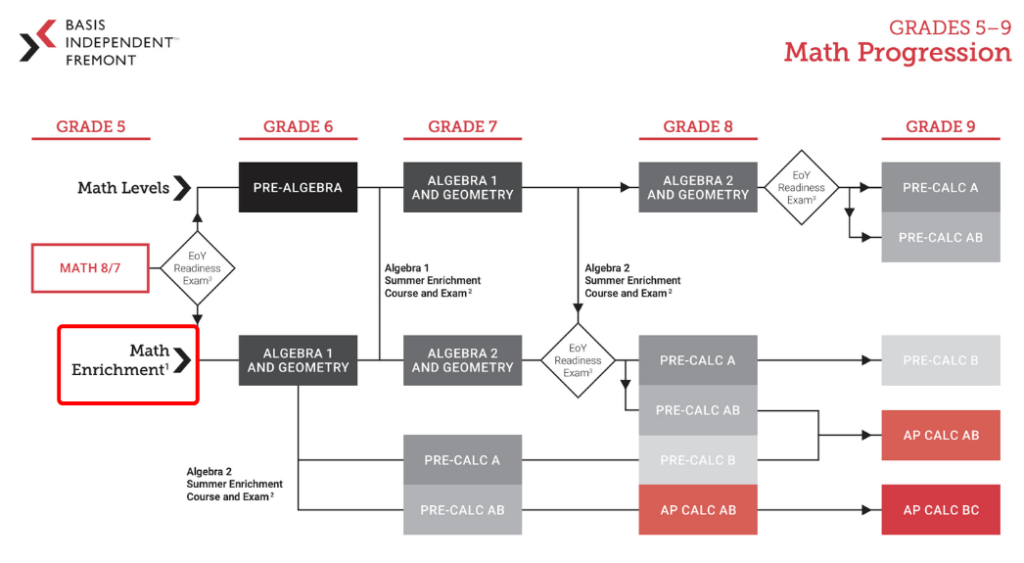
- Accelerated: These students progress faster, often starting Algebra 1 in Grade 7.
- Double Accelerated / Honors: The most advanced students may begin Algebra 1 in Grade 6, especially in top private schools like BASIS.
How Math Placement Test Affects High School and College Opportunities
Placement test results have a domino effect on a student’s future. Here’s how:
- Advanced Math Pathways: Students who enter accelerated or double accelerated tracks often finish Algebra 1, Geometry, Algebra 2 in middle school, allowing them to take higher-level math courses, like Pre-Calculus, in high school. By the time they reach 11th grade, they can take AP Calculus BC, setting the stage for college-level courses like Statistics.
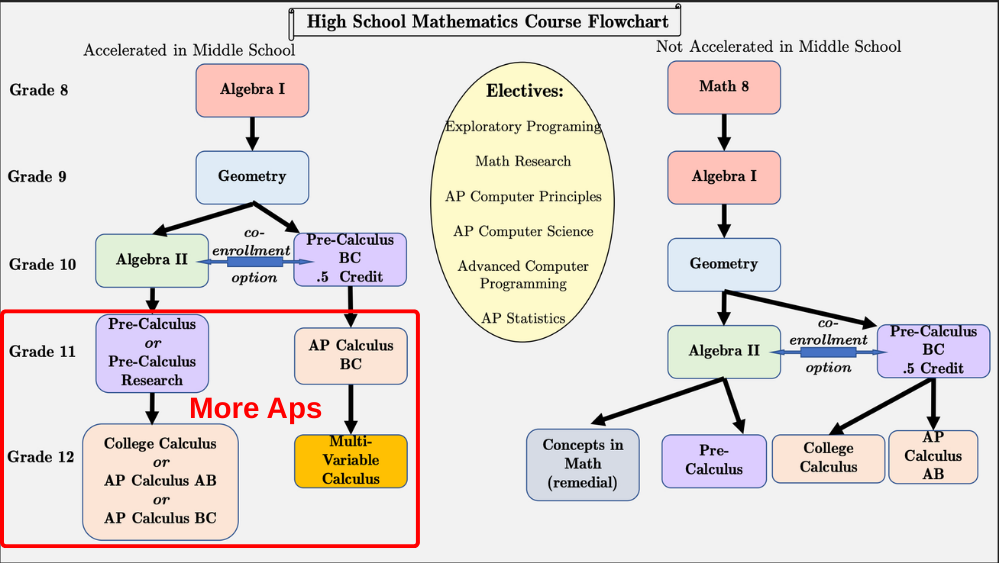
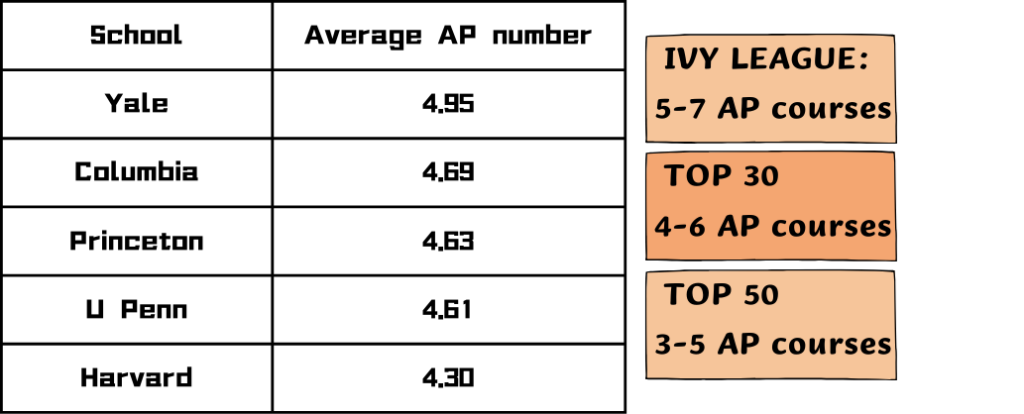
- University Admissions: Top colleges, especially Ivy League schools, value academic rigor. Students on the accelerated track demonstrate strong academic potential, they can take more AP courses, which is a powerful signal to college admissions officers.
How to Prepare for Advanced Math Placement Test?
Many parents ask, “My child gets A’s in school. Isn’t that enough?”
Usually, the answer is no.
The Core: Skip a Grade
The Honors or Accelerated track is essentially a grade-skipping program.
- If you stay on the Regular track, you take Math 6 in 6th grade.
- To place into Accelerated, you must prove to the school before 6th grade starts that you have already mastered the core concepts of Math 6.
- To place into Double Accelerated, you must prove to the school before 6th grade starts that you have already mastered the core concepts of Math 6 and Math 7-8.
Key Strategy: Filling the Knowledge Gap
Because the tests are adaptive, answering only grade-level questions correctly will just result in an “average” score.
- The Trap: If your child only knows what their current teacher taught them, the computer will never serve them the high-level questions needed to score in the 95th percentile.
- The Solution: You must systematically cover the “Gap”—the specific future topics your child hasn’t seen yet. Don’t just drill random problems; build understanding of these new concepts.
Check Your Child’s Math Readiness
Use the following checklist to evaluate whether your child is ready for an accelerated or honors math track, based on Common Core State Standards (CCSS).
Checklist for 5th Grade Students
Target: Skip Math 6
For students transitioning from Grade 5 to Grade 6, they should be familiar with:
- Ratios and Proportions: Understanding ratio concepts like a:b and solving unit rate problems.
- The Number System: Introduction to negative numbers and absolute value.
- Algebraic Expressions: Solving basic expressions like 3(x+5).
- Geometry: Calculating area and volume for irregular shapes and rectangular prisms.
Checklist for 6th Grade Students
Target: Skip Math 7-8 (Pre-Algebra)
For students transitioning from Grade 6 to Grade 7, they need to master:
- Linear Equations: Solving multi-step equations like y = mx + b.
- Integers & Rational Numbers: Mastering operations with negative numbers and fractions.
- Percent Applications: Solving problems involving discounts, tax rates, and tips.
- Proportions: Using proportions to solve problems related to geometric similarity.
How to Assess Your Child’s Math Level
Looking at the list above, you might feel unsure about exactly where your child stands. This is where diagnostic tools come in. You need an objective assessment to identify specific gaps before you start random test prep.
Use diagnostic tools like i-Ready Diagnostic to assess your child’s current math level. Identify areas where they need improvement and target those in preparation for the placement exam. i-Ready can also be taken outside of school through authorized providers like Think Academy.
Therefore, we have specially designed the Math Placement Test Prep Bootcamp for 5th and 6th graders to help them prepare efficiently before the test. Our course focuses on both key concepts and i-Ready Diagnostic, ensuring students build a solid foundation before test day.
Think Academy Math Placement Test Prep Bootcamp
It is tailored for Grade 5 and Grade 6 students preparing for upcoming math placement tests. Here is what the bootcamp includes:
- Free Access to Official i-Ready Test
We provide an initial assessment to pinpoint your child’s current math level. This helps identify their strengths and weaknesses across different modules, allowing for more targeted and effective practice.
- Four Live Sessions (2 Hours Each)
Cover the four essential placement test modules: Computation, Algebra, Geometry, and Statistics. Our teachers will provide personalized post-class follow-ups to help students master core concepts and spot areas for improvement.
- Clear Middle-to-High School Math Roadmap
Beyond the test, we can provide a clear long-term plan to guide your child’s math journey from middle school through high school.
???? Register Today
About Think Academy
Think Academy, part of TAL Education Group, helps K–12 students succeed in school today by building strong math foundations and critical thinking skills. At the same time, we focus on the bigger picture—developing learning ability, curiosity, and healthy study habits that inspire a lifelong love of learning. With expert teachers, proven methods, and innovative AI tools, we support every child’s journey from classroom confidence to long-term growth.
Check our math programs:
- Early Childhood — PreK
- Lower Elementary — Grades K–2
- Upper Elementary — Grades 3–5
- Middle School — Grade 6–10
Want more insights on math learning and parenting? Fill out the form on this page and subscribe to our newsletter for weekly tips and the latest resources.

Leave a Comment & Share Your Thoughts!

Share This Story, Choose Your Platform!
Related Posts