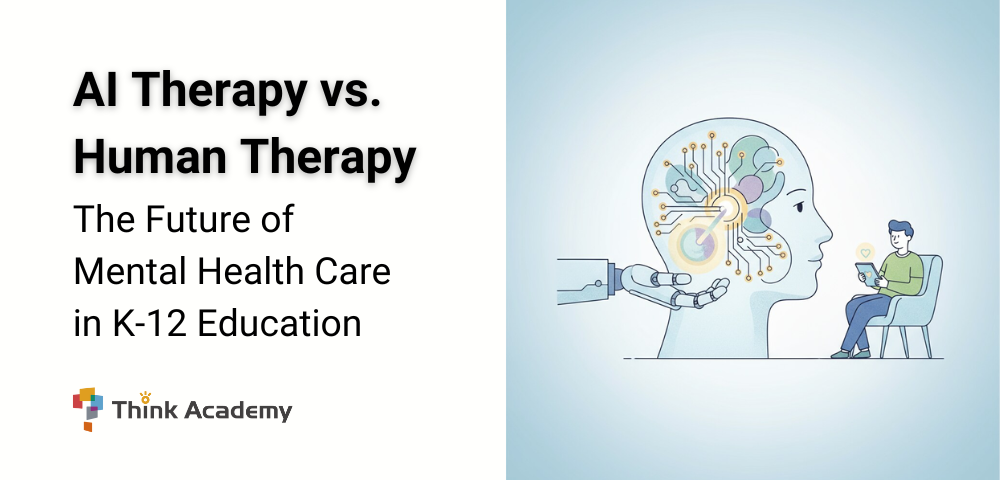
AI Therapy vs. Human Therapy: The Future of Mental Health Care in K-12 Education
As technology transforms classrooms, it’s also beginning to reshape how schools support students’ emotional well-being. AI-powered therapy tools—once limited to adults—are now appearing in K–12 settings, offering students quick access to stress management, emotional check-ins, and guidance support.
Yet, while artificial intelligence can expand mental health resources, human therapists and counselors remain irreplaceable in nurturing empathy, trust, and deep emotional understanding. This article explores how both can work together to improve mental health outcomes for students.
AI Therapy in Schools: A Growing Trend
Schools across the U.S. are experimenting with AI-driven mental health platforms to meet growing demands for student support. According to Artificial intelligence in healthcare, AI systems can analyze behavioral data and language patterns to identify early signs of stress or anxiety—often before teachers or parents notice them.
Popular tools include:
- Woebot: A friendly chatbot that uses evidence-based cognitive behavioral therapy (CBT) to help students manage anxiety and mood swings.
- Wysa: Offers AI-guided emotional support with access to licensed professionals when deeper help is needed.
- Youper: Helps students track emotions and practice mindfulness to build emotional resilience.
AI therapy in education is appealing because it’s accessible, anonymous, and available 24/7, helping students who might hesitate to talk to adults about emotional struggles.

The Human Element: Why School Counselors Still Matter
Even with technological advancements, human connection remains the cornerstone of student mental health.
As explained in Psychotherapy, the relationship between therapist and client—built on empathy and trust—is one of the strongest predictors of healing. For K–12 students, this connection is particularly critical. Children and teens often need to feel seen, heard, and validated before they can discuss sensitive issues like anxiety, family stress, or peer conflict.
Human counselors excel in:
- Recognizing emotional nuances through body language and tone.
- Understanding cultural and developmental factors that affect behavior.
- Providing consistent support and personalized interventions.
- Teaching emotional regulation, conflict resolution, and coping skills through SEL programs.
AI can complement this work, but it cannot replace empathy, context, or mentorship—qualities that shape students’ emotional growth and character.

The Balance: Integrating AI and Human Support in K–12 Settings
The most effective approach lies in collaboration, not competition, between AI tools and human counselors.
Schools can use AI therapy platforms to:
- Screen early warning signs of mental distress through journaling or chatbot interactions.
- Provide self-guided exercises for mindfulness, breathing, or emotional reflection.
- Support counselors by collecting anonymous trends that inform SEL or wellness programs.
Meanwhile, school counselors and psychologists can:
- Interpret AI data with professional insight and confidentiality.
- Offer follow-up sessions for students flagged by AI tools.
- Teach digital responsibility, helping students understand the limits and proper use of emotional AI.
This hybrid model ensures that technology increases reach while maintaining ethical, compassionate care.
Ethical and Developmental Considerations
Before adopting AI therapy in schools, educators and policymakers must address key concerns:
- Data privacy: Protecting sensitive emotional data collected from minors.
- Bias and accuracy: Ensuring AI algorithms don’t misinterpret cultural or linguistic expressions.
- Supervision: Guaranteeing that all AI interactions are monitored by qualified professionals.
Transparency, parental consent, and educator oversight are essential for ethical implementation in school environments.
Conclusion
AI therapy offers schools a new way to expand access to emotional support and detect early signs of mental health challenges. However, human counselors remain vital for fostering emotional intelligence, empathy, and resilience among students.
The future of K–12 mental health support depends on balance—where AI tools enhance accessibility and insight, while human professionals provide compassion and connection. Together, they can create a safer, more responsive environment that empowers every child to thrive.
About Think Academy
Think Academy, part of TAL Education Group, helps K–12 students succeed in school today by building strong math foundations and critical thinking skills. At the same time, we focus on the bigger picture—developing learning ability, curiosity, and healthy study habits that inspire a lifelong love of learning. With expert teachers, proven methods, and innovative AI tools, we support every child’s journey from classroom confidence to long-term growth.
Want more insights on math learning and parenting? Subscribe to our newsletter for weekly tips and the latest resources.
Leave a Comment & Share Your Thoughts!

Share This Story, Choose Your Platform!
Related Posts










