What Are Economics and Econometrics? A Parent’s Guide
Economics and econometrics are often viewed as abstract or advanced subjects, typically associated with graduate study or public policy experts. In practice, they are applied frameworks for understanding how the world works—how decisions are made, how data informs action, and how complex systems respond to change.
For parents, the real value of these fields lies not in early specialization, but in the thinking skills they cultivate over time. These skills begin developing far earlier than most families realize.
What Economics Really Studies
At its core, economics examines how people and institutions make decisions under constraints. Those constraints may involve money, time, labor, information, or opportunity.
Economists study questions such as:
- How incentives shape behavior
- Why trade-offs are unavoidable
- How individual choices aggregate into broader social outcomes
Beyond markets and prices, economics explains real-world issues including education access, housing shortages, income inequality, labor markets, and healthcare systems.
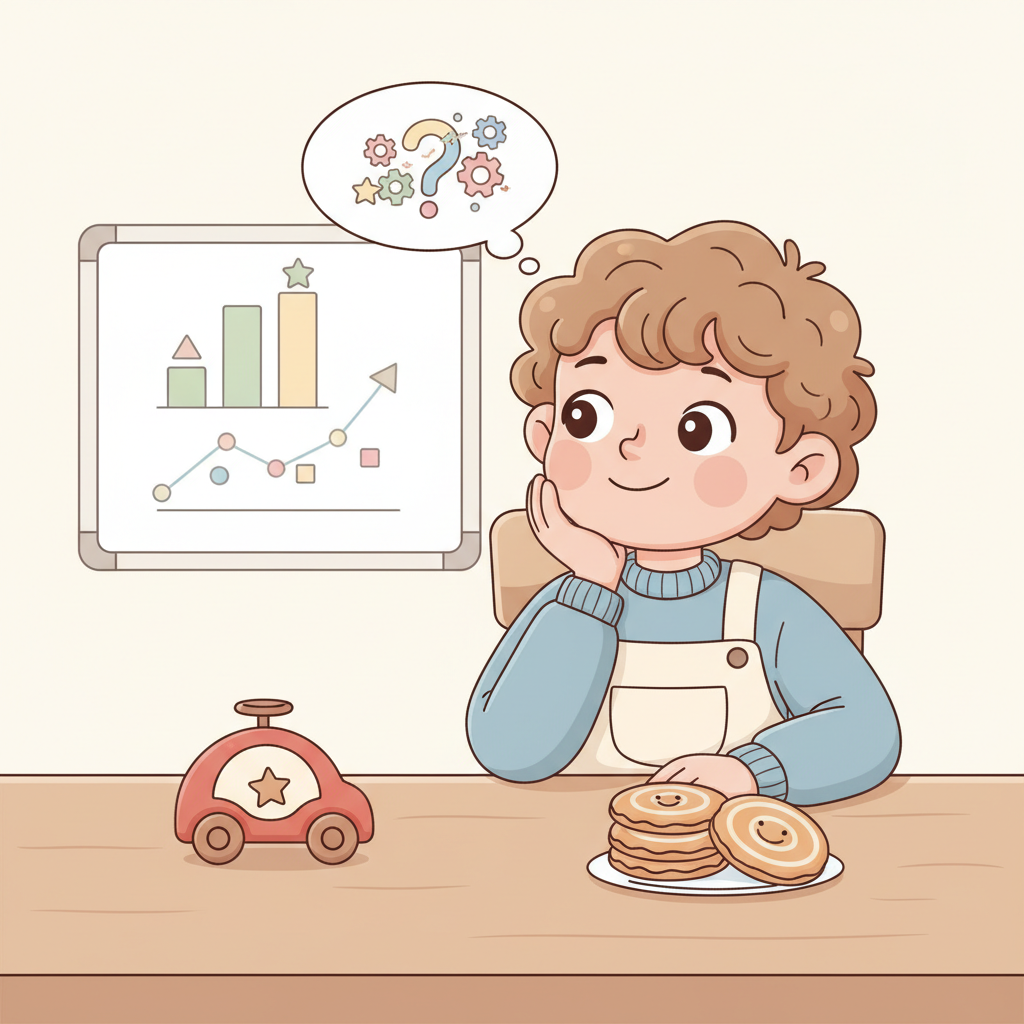
For children, early economic thinking appears naturally in daily life:
- Choosing how to spend limited allowance
- Deciding between activities when time is limited
- Understanding that choosing one option often means giving up another
These experiences form the foundation of rational decision-making and long-term planning.
What Econometrics Adds—and Why It Matters
If economics provides the theory, econometrics provides the evidence.
Econometrics applies mathematics and statistics to economic questions in order to:
- Test whether a theory actually holds in real data
- Measure the impact of policies or interventions
- Forecast trends while accounting for uncertainty
In professional settings, econometrics is used to separate correlation from causation, ensuring decisions are supported by data rather than assumption.
While advanced econometrics involves sophisticated statistical models, its intellectual foundation is simple and transferable:
- Collect data carefully
- Analyze patterns systematically
- Draw conclusions that can be defended logically
These habits begin with early exposure to numbers, graphs, comparisons, and structured reasoning.
Where Economics and Econometrics Are Used in the Real World
Economics-related skills are deeply embedded in many influential institutions.
Government and Public Policy
Economists and econometricians play central roles in organizations such as the Federal Reserve, the U.S. Department of the Treasury, the World Bank, and the International Monetary Fund.
Their analyses inform interest-rate decisions, tax policy, labor regulations, and international development programs.
Finance and Risk Management
Financial institutions including Goldman Sachs, JPMorgan Chase, and BlackRock rely on economic modeling to:
- Forecast market behavior
- Manage financial risk
- Evaluate long-term investment strategies
Technology and Data-Driven Industries
Modern technology companies increasingly employ economists as applied data experts. Companies such as Google, Amazon, and Meta use econometric methods to design experiments, analyze user behavior, and evaluate product changes.
Across these sectors, the common requirement is quantitative reasoning applied to real human behavior.
Why Economics-Related Skills Matter Long-Term
Strong foundations in economics and data analysis are consistently associated with favorable long-term outcomes. According to the U.S. Bureau of Labor Statistics, economists earned a median annual wage of approximately $115,440 in 2024, with higher earnings in federal government and consulting roles. Closely related professions that rely heavily on econometric thinking show similarly strong prospects. Statisticians earned median salaries above $100,000, with job growth projected well above the national average.
These outcomes reflect sustained demand for professionals who can:
- Interpret complex data
- Evaluate uncertainty and risk
- Support decisions with evidence rather than intuition
Crucially, success in these roles is not driven by early exposure to advanced formulas. Instead, it depends on logical reasoning, quantitative judgment, and clear explanation, developed steadily over many years.
U.S. Bureau of Labor Statistics: Economists

The Core Skills Behind Economics and Econometrics
Despite their advanced reputation, economics and econometrics rely on a small set of deeply transferable skills:
- Quantitative reasoning: comparing magnitudes, identifying trends, and understanding proportional relationships
- Logical structure: building arguments with clear assumptions and consistent reasoning
- Data interpretation: reading charts, questioning conclusions, and explaining results responsibly
Children who regularly explain how they solved a problem or interpret simple data displays are already developing the same cognitive tools used in advanced economic analysis.
How to Inspire Economic and Data Thinking at Different Ages
Children do not need formal economics lessons to begin developing these skills. What matters is age-appropriate exposure to structured choices, numbers, and reasoning.
Ages 4–7: Building Number Sense and Value Awareness
At this stage, children learn through concrete experience. Parents can support early economic thinking by:
- Talking through everyday choices and explaining why one option is chosen over another
- Using cooking or crafts to introduce measurement concepts such as whole, half, and quarter
- Playing simple “store” games with play money to practice counting and making change
These activities help children connect numbers with meaning and begin to understand trade-offs.
Ages 8–12: Applying Math to Decisions and Patterns
Children in this age range are ready to connect math with reasoning and outcomes. Useful approaches include:
- Tracking patterns in games or sports statistics to identify trends
- Creating a simple allowance budget and reviewing spending choices together
- Discussing scenarios that involve limited resources, such as planning within a fixed budget
At this stage, children begin to see how data can guide better decisions—a central idea in econometrics.
Ages 13+: From Reasoning to Analysis
As abstract thinking matures, students can engage more deeply with data and evidence:
- Interpreting graphs and statistics from news or school projects
- Justifying conclusions using evidence rather than opinion
- Exploring cause-and-effect relationships between variables
These habits closely mirror the analytical thinking used in economics, statistics, and data science.
Why the Foundation Starts Early
Students who succeed in economics later tend to share common traits: comfort with numbers, curiosity about patterns, and confidence in structured problem-solving. These traits are shaped through early math experiences that emphasize reasoning over speed and understanding over memorization.
Over time, this foundation prepares students not only for economics and econometrics, but for any discipline that values evidence-based thinking.
Final Takeaway for Parents
Economics and econometrics lead to influential careers in public policy, finance, technology, and research. More importantly, they cultivate a disciplined way of thinking—one that values logic, evidence, and long-term perspective.
The path to these fields does not begin with advanced coursework. It begins with strong mathematical foundations, clear reasoning habits, and regular engagement with data and decisions. Supporting these skills early equips children with tools that remain valuable across fields and throughout their lives.
To help families get started, we offer free math worksheets designed to strengthen number sense, logical reasoning, and data interpretation across elementary and middle school levels. These worksheets are structured to encourage explanation, comparison, and pattern recognition—the same foundational skills that later support economic and data-driven thinking.
If you’re looking for a simple, age-appropriate way to reinforce these abilities at home, downloading and working through a few worksheets together is a practical first step.
About Think Academy
Think Academy, part of TAL Education Group, helps K–12 students succeed in school today by building strong math foundations and critical thinking skills. At the same time, we focus on the bigger picture—developing learning ability, curiosity, and healthy study habits that inspire a lifelong love of learning. With expert teachers, proven methods, and innovative AI tools, we support every child’s journey from classroom confidence to long-term growth.
Check our math programs:
- Early Childhood — PreK
- Lower Elementary — Grades K–2
- Upper Elementary — Grades 3–5
- Middle School — Advanced math topics, including Algebra 1, Algebra 2, and Geometry
Want more insights on math learning and parenting? Fill out the form on this page and subscribe to our newsletter for weekly tips and the latest resources.
Leave a Comment & Share Your Thoughts!
Share This Story, Choose Your Platform!
Related Posts