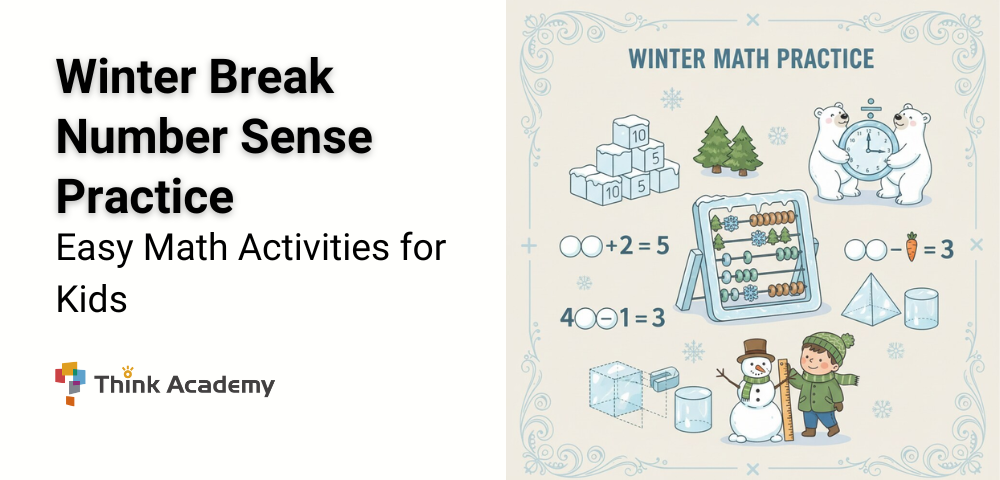
Winter Break Number Sense Practice: Easy Math Activities for Kids
Winter break offers a valuable opportunity to support children’s math development outside the classroom. While school schedules pause, consistent winter break number sense practice helps prevent learning loss and keeps foundational skills active. With the right approach, families can turn everyday holiday moments into meaningful math experiences that feel natural rather than instructional.
For children ages 4–12, number sense activities during winter break support confidence, curiosity, and readiness for the next school term.
What Is Number Sense and Why It Matters
Number sense refers to a child’s intuitive understanding of numbers and their relationships. It includes skills such as counting, comparing quantities, estimating, recognizing patterns, and understanding how numbers behave in real situations.
Strong number sense allows children to:
- Reason flexibly with numbers
- Solve problems without relying solely on formulas
- Develop confidence in math across grade levels
Winter break is an ideal time to reinforce these skills through low-pressure, hands-on experiences that connect math to daily life.

Easy Winter Break Number Sense Practice for Younger Children (PreK–Grade 2)
For younger learners, number sense develops through observation, counting, and discussion rather than formal calculations.
Simple holiday activities include:
- Counting ornaments while decorating and comparing which colors appear more often
- Sorting candy canes or small treats into groups and counting totals
- Estimating how many steps it takes to walk from one room to another
Key goals at this stage:
- Recognizing quantities
- Understanding “more,” “less,” and “same”
- Connecting numbers to real objects
These activities build early math confidence without worksheets or drills.
Practical Number Sense Activities for Upper Elementary (Grades 3–5)
As children grow older, winter break math can involve reasoning, estimation, and basic operations.
Effective activities include:
- Baking or cooking and measuring ingredients using fractions
- Doubling or halving recipes and predicting outcomes
- Estimating quantities, then checking results
- Keeping a simple log of daily spending or holiday costs
These experiences strengthen:
- Place value understanding
- Fractions and decimals
- Mental math and estimation
Children begin to see math as a useful tool rather than an abstract subject.
Why Holiday Math Practice Works Across K–12
Math practice during winter break is most effective when it is:
- Short and consistent
- Connected to real situations
- Free from test pressure
Benefits include:
- Reduced math anxiety
- Stronger retention of core skills
- Improved readiness for the next school term
- A more positive attitude toward learning
When math feels useful and familiar, children are more willing to engage and persist.

Final Takeaway: Turning Winter Break Into Meaningful Math Time
Winter break number sense practice does not require formal lessons or extra homework. Through everyday activities—baking, decorating, budgeting, and playing games—children strengthen essential math skills while enjoying the holiday season.
To reinforce these skills more systematically,
provide structured, grade-appropriate number sense practice from Kindergarten through Grade 10. Organized by math topic and difficulty, these worksheets help students:
- Strengthen counting, place value, and number relationships
- Practice estimation, mental math, and flexible thinking
- Connect real-world holiday activities to formal math understanding
Used together, hands-on winter activities and targeted worksheets help children maintain momentum, build confidence, and return to school ready to learn.
About Think Academy
Think Academy, part of TAL Education Group, helps K–12 students succeed in school today by building strong math foundations and critical thinking skills. At the same time, we focus on the bigger picture—developing learning ability, curiosity, and healthy study habits that inspire a lifelong love of learning. With expert teachers, proven methods, and innovative AI tools, we support every child’s journey from classroom confidence to long-term growth.
Check our math programs:
- Early Childhood — PreK
- Lower Elementary — Grades K–2
- Upper Elementary — Grades 3–5
- Middle School — Advanced math topics, including Algebra 1, Algebra 2, and Geometry
Want more insights on math learning and parenting? Fill out the form on this page and subscribe to our newsletter for weekly tips and the latest resources.
Leave a Comment & Share Your Thoughts!

Share This Story, Choose Your Platform!
Related Posts










