Project-Based Learning School: How PBL Works and How to Choose
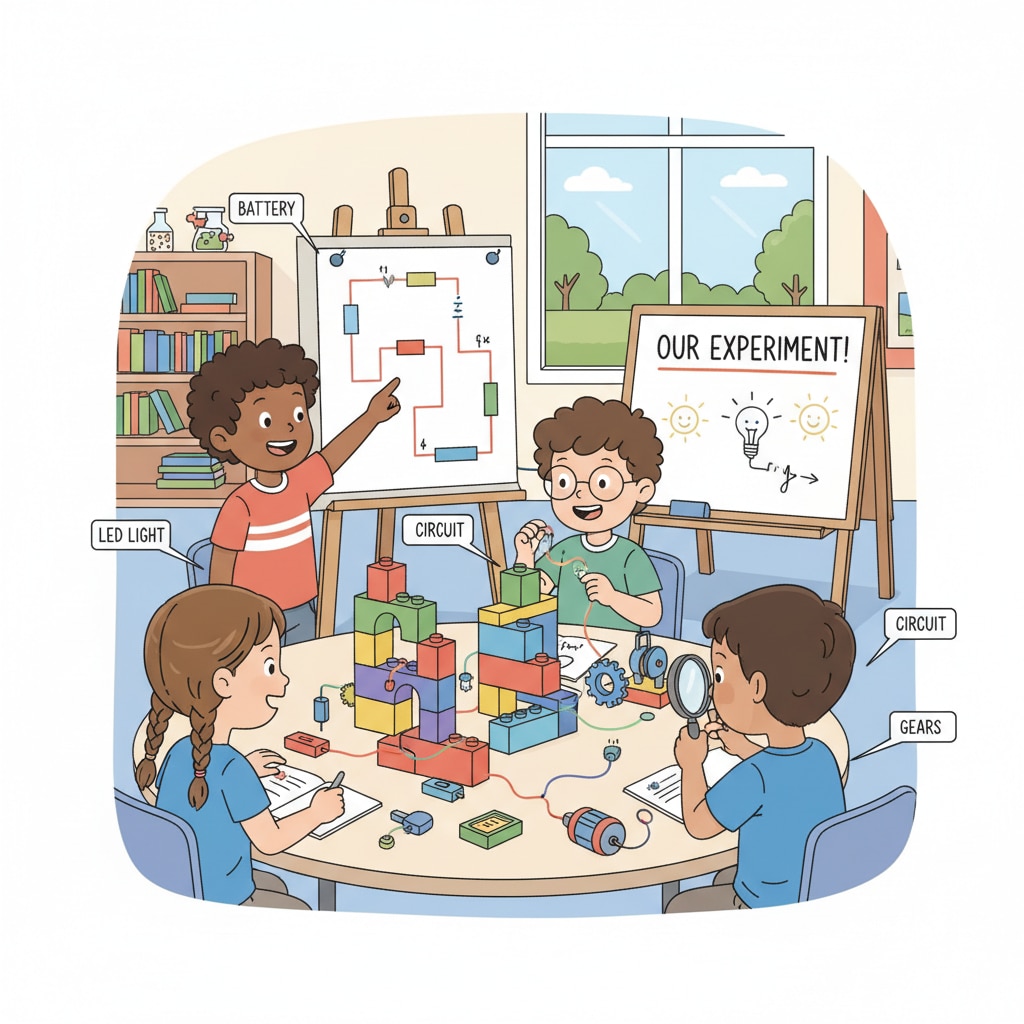
A Project-Based Learning School is an educational setting where students learn academic content and essential skills by working on extended, structured projects centered on real-world questions or problems. Instead of organizing learning primarily around lectures or isolated lessons, instruction is built around inquiry, application, and reflection.
In a project-based model, students research topics, apply knowledge across subjects, and demonstrate understanding through outcomes such as presentations, models, written explanations, or portfolios. Learning is driven by meaningful tasks that require students to think critically, make decisions, and revise their work over time.
This approach is commonly used in elementary and middle school environments, where developing curiosity, reasoning, and learning habits is as important as mastering content.
Core Features of a Project-Based Learning School
While implementation varies by school, effective Project-Based Learning programs share several defining characteristics.
Learning organized around projects
Projects last days or weeks rather than a single class period. Each project is anchored by a clear question or challenge that guides student inquiry.
Interdisciplinary instruction
Projects often integrate multiple subjects. For example, a project on designing a school garden may involve mathematics (measurement and data), science (plant growth), and language arts (research and presentation).
Student-centered inquiry
Students actively ask questions, gather information, test ideas, and refine solutions. Teachers support the process by providing structure, guidance, and feedback rather than delivering information exclusively through lectures.
Emphasis on reasoning and explanation
Students are expected to explain their thinking, justify decisions, and reflect on both successes and challenges. This supports deeper conceptual understanding.
Ongoing assessment
Assessment includes project outcomes, written reflections, presentations, and teacher observations. Evaluation focuses on both process and understanding, not only final answers.
How to Evaluate Whether a Project-Based Learning School Is a Good Fit
Not all programs labeled “project-based” offer the same level of structure or academic rigor. When evaluating a Project-Based Learning School, families may consider several factors.
Academic alignment
Strong programs align projects with grade-level standards and clearly defined learning goals. Projects should reinforce core academic skills, not replace them.
Structure and guidance
Effective PBL environments balance student independence with teacher guidance. Clear expectations, timelines, and feedback are essential, especially for younger learners.
Skill development focus
Look for evidence that projects intentionally develop skills such as problem-solving, communication, and mathematical reasoning, rather than focusing only on creativity or hands-on activity.
Assessment transparency
Schools should be able to explain how student learning is assessed and how progress is monitored over time.
A well-designed Project-Based Learning School provides both engagement and academic depth.
Examples of Project-Based Learning in Practice
Project-based learning can take many forms depending on age and subject area.
In early elementary grades, students might design a simple model community, learning about shapes, measurement, and basic civic roles. In upper elementary grades, projects may involve researching local environmental issues, collecting data, and presenting findings with charts and written explanations.
At the middle school level, projects often become more complex. Students might analyze real data, compare multiple solutions to a problem, or build prototypes that require iterative testing. Across all levels, the emphasis remains on applying academic knowledge to meaningful tasks.
These examples illustrate how projects serve as a framework for learning rather than an add-on activity.

How Project-Based Learning Compares to Traditional Instruction
Traditional schooling typically emphasizes teacher-led lessons, textbooks, and periodic testing. This model can be effective for delivering information efficiently, especially when content mastery is the primary goal.
Project-Based Learning differs in several important ways:
- Learning begins with a problem or question rather than a lecture
- Students apply knowledge as they learn it, rather than after instruction is complete
- Assessment includes reasoning, process, and communication, not only correct answers
Compared to other student-centered approaches, such as inquiry-based or experiential learning, PBL is more structured. Projects are intentionally designed to meet academic objectives and develop specific skills over time.
Both traditional and project-based models have strengths. Many schools blend elements of both to balance content coverage with deeper understanding.
Conclusion
While project-based learning emphasizes inquiry and application, students still benefit from strong foundational skills—particularly in mathematics. Many projects rely on accurate calculation, data interpretation, measurement, and logical reasoning.
Think Academy’s math worksheets,
designed for Kindergarten through Grade 10, support these foundational skills through structured practice. By strengthening core math understanding and precision, consistent worksheet practice helps students participate more confidently and effectively in project-based learning environments.
When conceptual exploration is paired with solid skill-building, students are better prepared to reason, explain, and apply mathematics within complex projects.
About Think Academy
Think Academy, part of TAL Education Group, helps K–12 students succeed in school today by building strong math foundations and critical thinking skills. At the same time, we focus on the bigger picture—developing learning ability, curiosity, and healthy study habits that inspire a lifelong love of learning. With expert teachers, proven methods, and innovative AI tools, we support every child’s journey from classroom confidence to long-term growth.
Check our math programs:
- Early Childhood — PreK
- Lower Elementary — Grades K–2
- Upper Elementary — Grades 3–5
- Middle School — Grades 6-10
Want more insights on math learning and parenting? Fill out the form on this page and subscribe to our newsletter for weekly tips and the latest resources.
Leave a Comment & Share Your Thoughts!

Share This Story, Choose Your Platform!
Related Posts










