How to Graph One-Variable Linear Inequalities on a Number Line
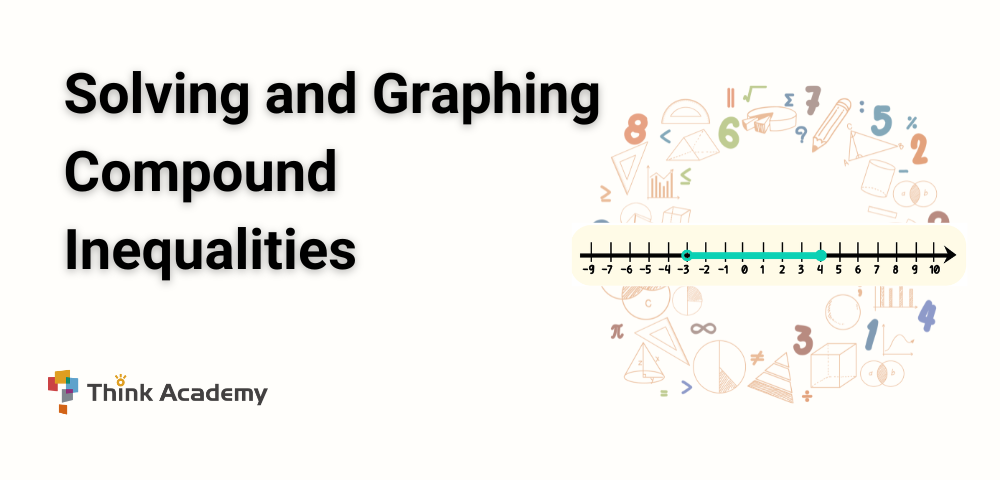
By Grade 5 at Think Academy (Grade 6 in school), students begin graphing one-variable linear inequalities. The most common hurdles are mixing up open vs. closed circles and knowing which direction to shade. This guide gives clear steps to avoid those mistakes and read number lines with confidence.
What Are Inequalities?
An inequality is like an equation, but instead of showing two sides are equal, it shows that one side is bigger, smaller, or possibly equal to the other.
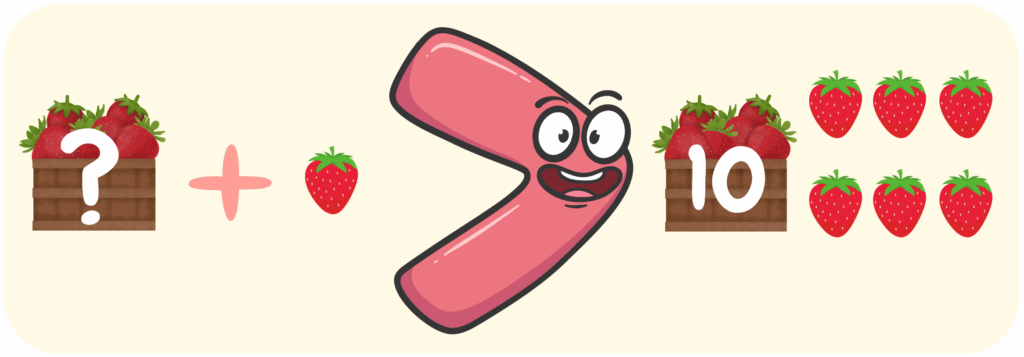
Inequalities describe a range of possible answers, not just one solution.
What Is a Number Line?
A number line is a straight line used to show numbers in order.

It has three main parts:
- Origin (zero): The point where we start, usually marked as 0.
- Unit length: The distance between two marks, showing one step (for example, from 0 to 1).
- Positive direction: Numbers increase to the right (positive), and decrease to the left (negative).
On a number line, every point stands for a number. This makes it much easier to see and understand solutions to equations and inequalities.
Five Types of Relationships on a Number Line
When we graph inequalities, we use open circles and closed circles:
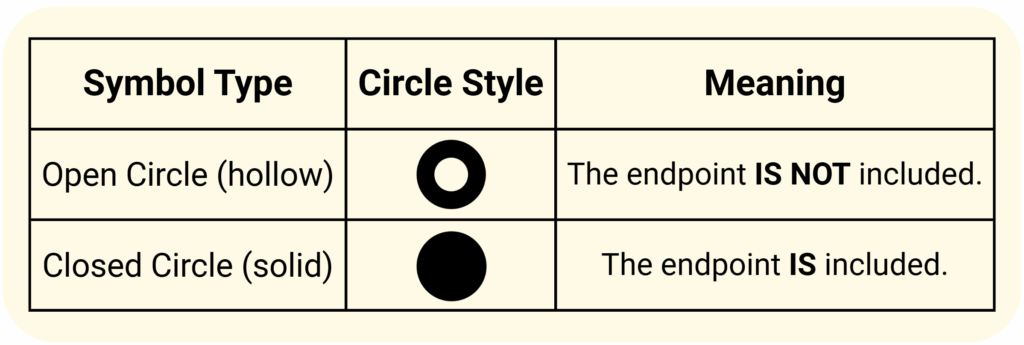
Let’s see each type.
Equal to (=)
Example:
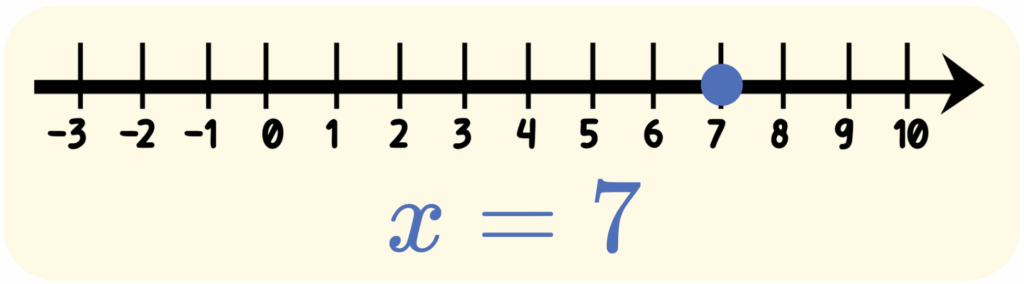
On the number line, we put a closed circle at 7, because the solution is exactly 7.
Greater than (>)
Example:
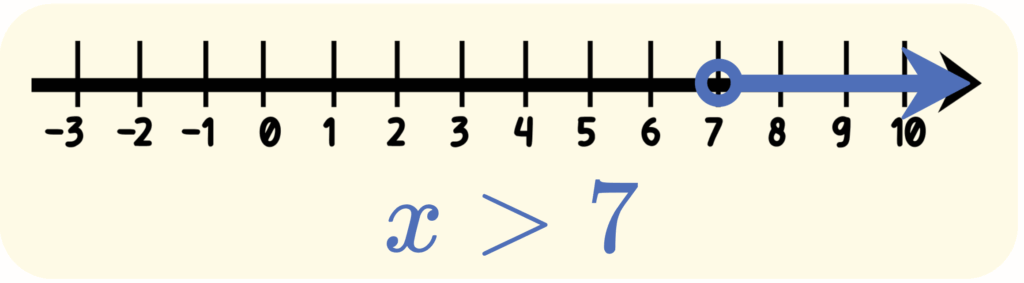
Draw an open circle at 7, and shade the line to the right. This shows that all numbers bigger than 7 work.
Less than (<)
Example:
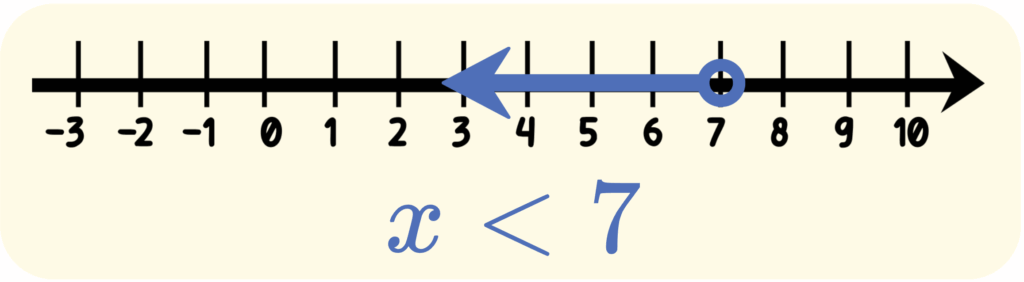
Draw an open circle at 7, and shade the line to the left. This shows all numbers smaller than 7 work.
Greater than or Equal to (≥)
Example:
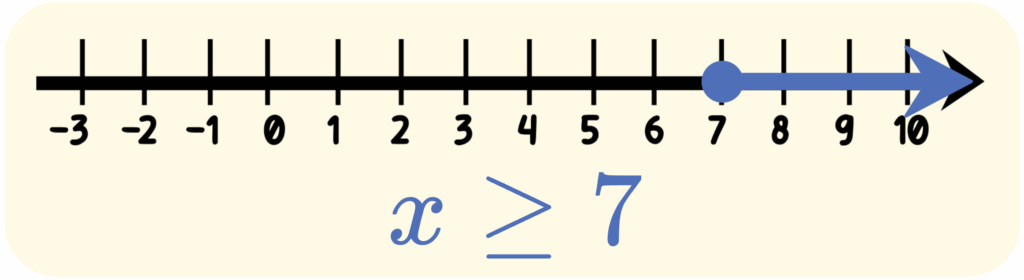
Draw a closed circle at 7, and shade to the right. The solution includes 7 and everything bigger.
Less than or Equal to (≤)
Example:
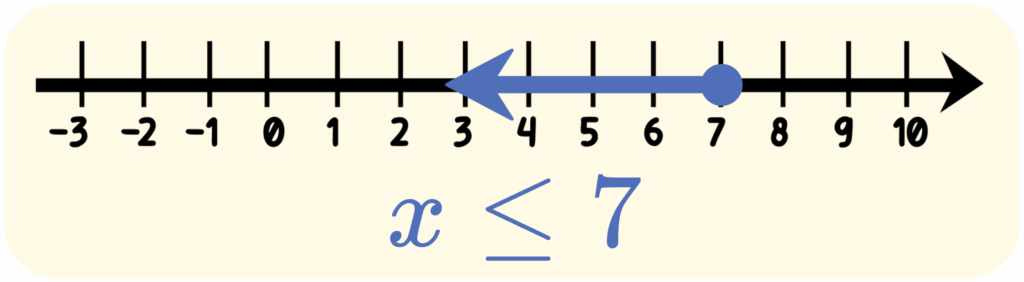
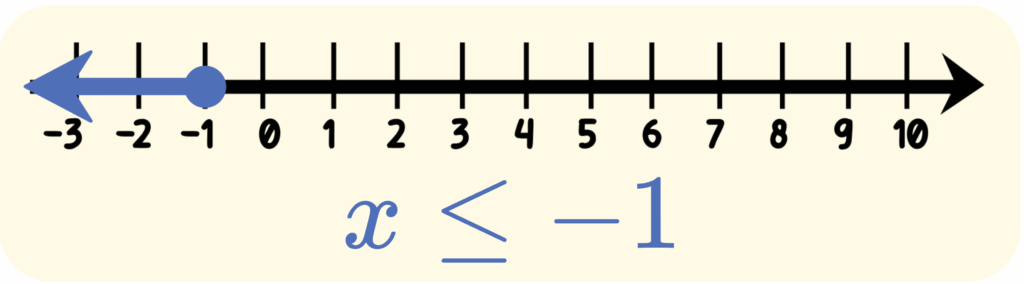
Draw a closed circle at 7, and shade to the left. The solution includes 7 and everything smaller.
Example Problems: Graphing One-Variable Linear Inequalities
Example 1
Graph the inequality on the number line.
???? ≥ 0

Solution:
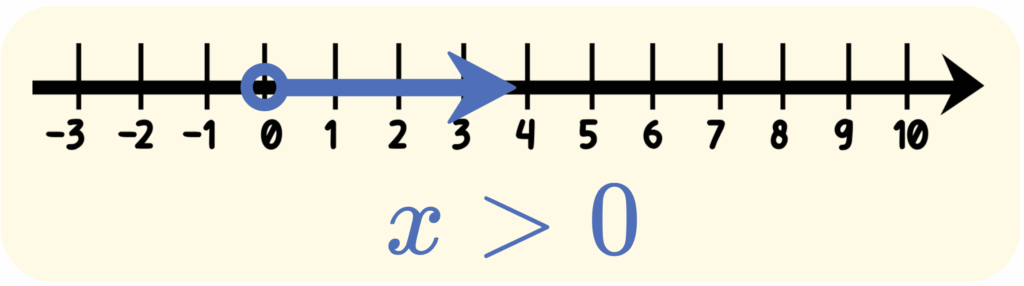
Example 2
Graph the inequality on the number line.
???? ≤ −1

Solution:
Summary: Graphing One-Variable Linear Inequalities
Graphing one-variable linear inequalities is all about:
- Knowing the inequality/equality sign (>, <, ≥, ≤, =);
- Deciding if the circle is open or closed;
- Shading the correct side of the number line.
Want more printable practice?
Additional Math Topics for Grade 6 Linear Equations – with Free Worksheets
More Middle School Algebra Resources Ready for You
We’ve created a full library of printable resources — from foundational math to logic-based challenges — organized by grade to support every stage of your child’s journey.
More related articles
- How to Solve One-Step Linear Equations | Grade 5–6
- Different Forms of Linear Functions: Standard, Slope-Intercept & Point-Slope
- How to Represent Linear Functions: Slope-Intercept vs Point-Slope Form
- How to Graph and Solve a Linear Function Step by Step
- Linear Functions: The Features of Parallel and Perpendicular
Think Academy Math Program
If you’re looking to build on math strengths or close math gaps, we offer comprehensive K–12 math programs designed to:
- Catch up: Fill in gaps and strengthen foundational skills
- Stay ahead: Maintain a competitive edge and accelerate math progress
- Go further: Take on challenge math competitions, Math kangaroo, AMC competitions
Next Step: Take a personalized evaluation to understand your child’s current math progress and get a tailored roadmap for courses, pacing, and goals.
About Think Academy
Think Academy, a leading K–12 math education provider wholly owned by TAL Education Group, is dedicated to helping students build strong mathematical foundations and critical thinking. Our structured curriculum provides multiple course levels designed to accommodate students with diverse academic goals and proficiency levels, ensuring targeted and effective learning experiences. Supported by advanced teaching methods, expert instructors, and innovative AI technology, Think Academy consistently demonstrates excellence, trustworthiness, and proven expertise in mathematics education.
Want more insights on math education and parenting tips? Subscribe to our newsletter for weekly expert advice and updates on the latest learning tools.
Leave a Comment & Share Your Thoughts!

Share This Story, Choose Your Platform!
Related Posts