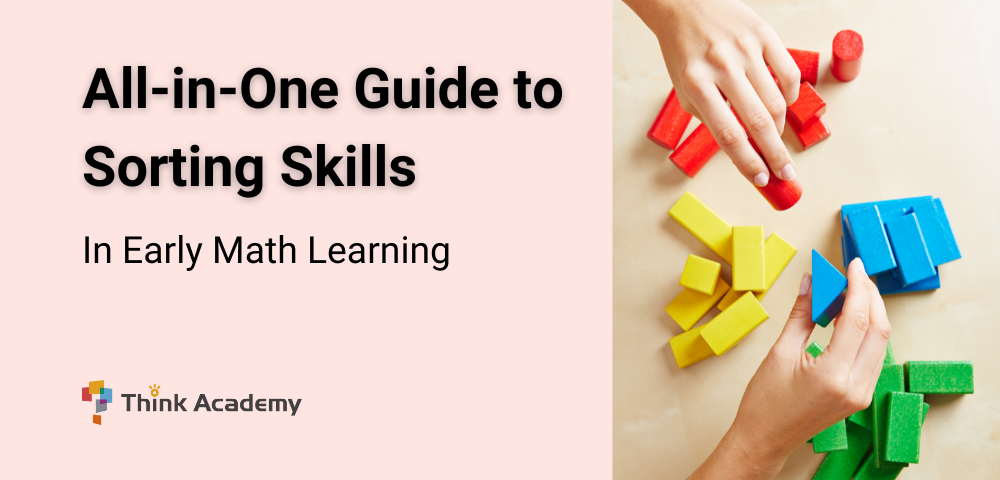
All-in-One Guide to Sorting Skills in Early Math Learning
Sorting isn’t just play—it’s one of the earliest and most important thinking skills in early childhood math development. From recognizing colors and shapes to building problem-solving habits, sorting helps children organize information, make comparisons, and understand how things relate to one another. In this guide, you’ll discover what sorting really means, why it matters, and how to support it through daily routines, purposeful play, and a variety of hands-on activities.
What Is Sorting?
Sorting is a key cognitive skill in early childhood education. It involves identifying similarities and differences between objects and organizing them into categories based on shared attributes—such as color, shape, size, or type.
Although it may look like simple tidying, sorting is actually a powerful mental process that builds logical thinking, attention to detail, and early math readiness.
Common Confusion: Matching vs. Grouping vs. Soring vs. Classifying
To support early learning effectively, it’s helpful to understand how children develop cognitive skills through hands-on play. Four core concepts—matching, grouping, sorting, and classifying—typically unfold in a natural sequence:
Suggested Developmental Sequence:
- Matching — Pair things that are the same (focus: recognition, one-to-one correspondence)
- Grouping — Put items together based on any chosen purpose or idea (focus: conceptual thinking, flexible reasoning)
- Sorting — Divide items into sets using clear, consistent rules (focus: analysis, rule-following, logical classification)
- Classifying — Explain or label why groups exist; sort by abstract or complex attributes (focus: language, generalization, higher-order thinking)
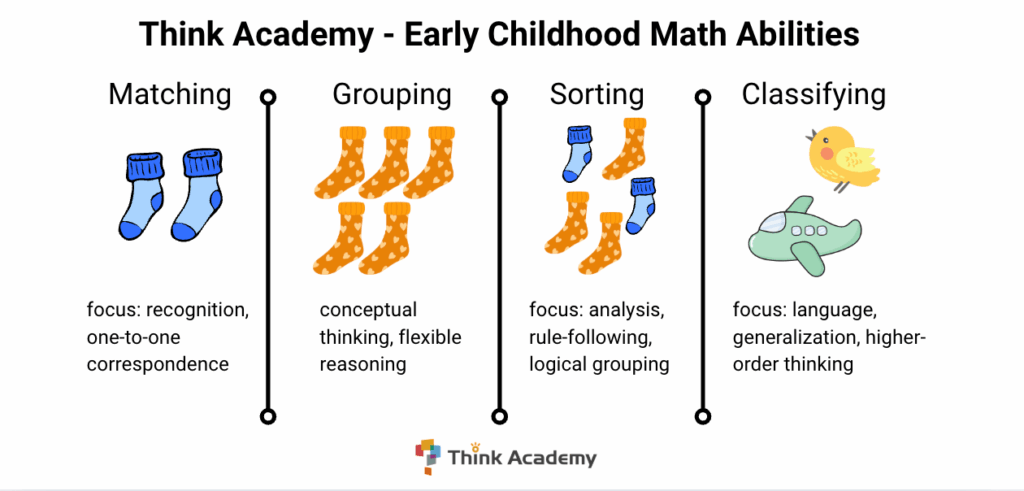
Recognizing and supporting this progression helps build a strong foundation for early math reasoning and lifelong problem-solving. While these concepts—matching, grouping, sorting, and classifying—often overlap in practice, the goal isn’t to label them perfectly. What matters most is helping children develop these core thinking skills through both everyday experiences and structured learning.
Why Sorting Matters for 3–4 Year Olds
Sorting is more than an activity—it’s an early sign of logical thinking and math readiness. Below, we explore the specific ways it supports brain development, academic preparation, and communication skills in preschoolers.
1. Visual Development and Sorting Go Hand-in-Hand
Visual skills in infants and toddlers are still developing. Sorting activities help strengthen this system by requiring children to focus, compare, and discriminate between shapes and colors.
- By 5 months: Babies begin developing depth perception and basic color vision.
- By 12–18 months: Toddlers start matching identical objects like two same-sized blocks.
- By 24–30 months: Children begin sorting by a single attribute, such as shape or color.
- By 36–48 months: Most preschoolers can sort by multiple features—like function or category.
Grasping a red circle and deciding where it goes isn’t just play—it’s your child’s brain and eyes working together.
Source: AOA – Infant Vision: Birth to 24 Months of Age
Activities like color sorting help develop hand-eye coordination, visual discrimination, and tracking skills—all still maturing through age 4.
2. Sorting Encourages Language and Memory Growth
Each time your child sorts and hears words like “big,” “square,” or “yellow,” they’re building:
- Real-world vocabulary
- Descriptive language practice
The more these words are connected to action, the stronger the learning.
3. Sorting Builds Foundational Math and Thinking Skills
When a child groups shapes or matches colors, they are:
- Learning to recognize key attributes like color, size, and shape
- Foundation of comparison, classification, and problem-solving
These are basic skills for understanding numbers, patterns, and categories—all core concepts in early math.
When Do Children Start Sorting?
Sorting develops in stages: first matching, then grouping, followed by sorting and classifying. These skills aren’t just for math—they show up in daily life, like finding matching socks or organizing colored blocks during play.
| Age | Typical Skill |
|---|---|
| 12–18 months | Match identical objects (2 red apples) |
| 19–24 months | Begin identifying color, shape or size |
| 24–36 months | Match by shape or color, usually focus on one feature |
| 36+ months | Sort multiple objects into categories by color, shape, or function |
How to Use Sorting Tools or Games Effectively at Home
If you’re introducing sorting activities at home, here are some helpful tips:
- Begin with one variable (e.g., sort by color), then introduce more (e.g., color + shape)
- Keep sessions short and engaging (5–10 minutes)
- Use language prompts like, “Can you find a red circle?”
- Turn clean-up into practice: sort toys as you put them away
- Add variety: try timing games, blindfold sorting, or storytelling with shapes
Real-Life Examples of Sorting Skills in Action
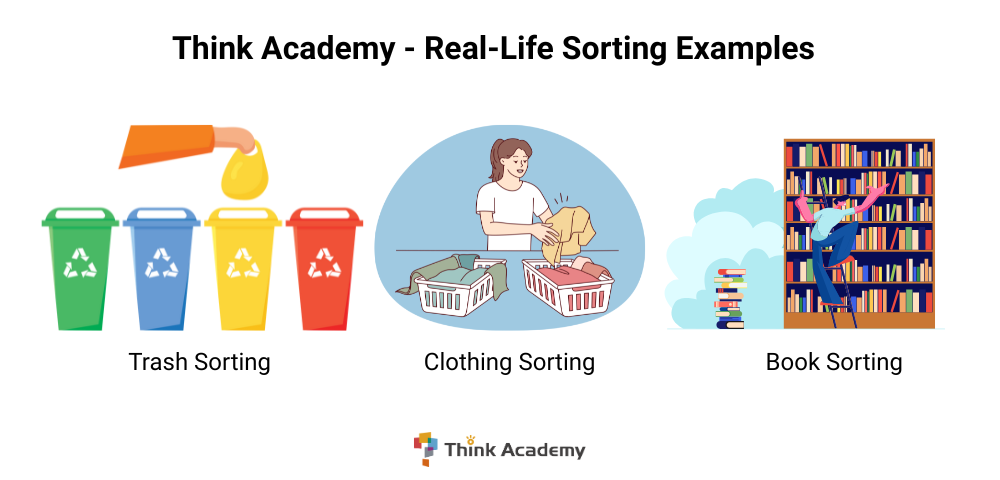
- Matching socks by size and color during laundry
- Sorting toys into color bins: “All red cars go here!”
- Grouping leaves by shape on a walk
- Matching round fruit to round plates at snack time
Real Experiences Shared by Parents: Making Sorting Playful
Make it a game, not a task.
Many parents discovered that inviting their child to “help” rather than “practice” made sorting more engaging. One mom shared how she asked, “Should this red circle go with the green triangle, or the other circles?” Her daughter immediately took charge.
“Once I started asking her where the shapes should go, she jumped in and started explaining the rules to me. That’s when I knew it clicked.”
Use playful guidance.
Gentle choices like “Want to sort the stars or the circles first?” or using a whisper voice made sorting fun even during fussy moments. One dad shared how he used a reward system:
“Yes, you can open the surprise box—but only after the yellow shapes find their home!”
Let imagination lead.
One parent created a story: “The red squares are on a mission—they need to avoid the green triangles!” By inventing characters and goals, even basic sorting activities became immersive pretend play. The best part? Both child and adult stayed engaged longer.
The takeaway: Children are most engaged when adults join in. Sorting becomes more than learning—it becomes connection, creativity, and discovery.
Recommended Sorting Toys and Games for Home Use
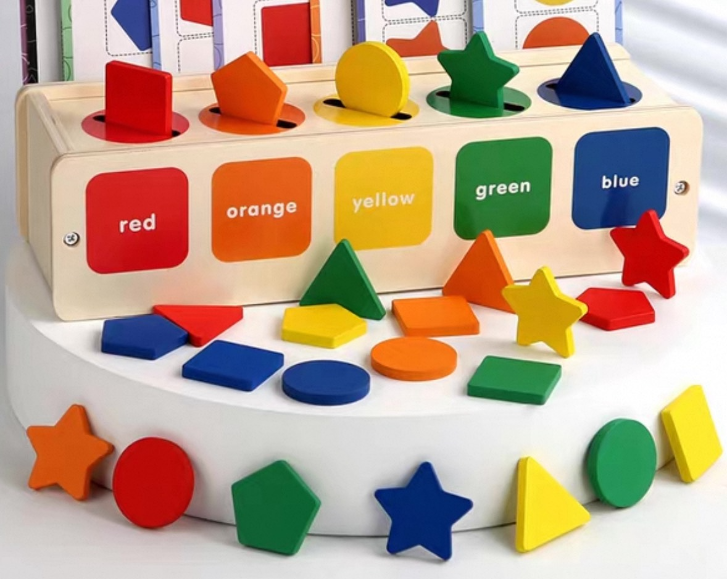
1. Shape and Color Sorting Boxes
Classic boxes feature holes in different shapes, while upgraded versions allow children to sort by both shape and color.
- Boost fine motor and spatial skills
- Look for safe materials and toddler-friendly sizes
- Think Academy’s ThinKit Box includes both shape and color sorting
2. Printable Sorting Games
Available on sites like Twinkl
- Budget-friendly and plenty of options
- May feel repetitive over time
3. Online Sorting Games
Found on platforms like Education.com
- Offer advanced sorting challenges
- Consider screen time limitations
4. Picture Books
Great for visual learners and screen-free time
- Reinforce shape and category awareness
- Browse recommended titles here
5. Puzzles
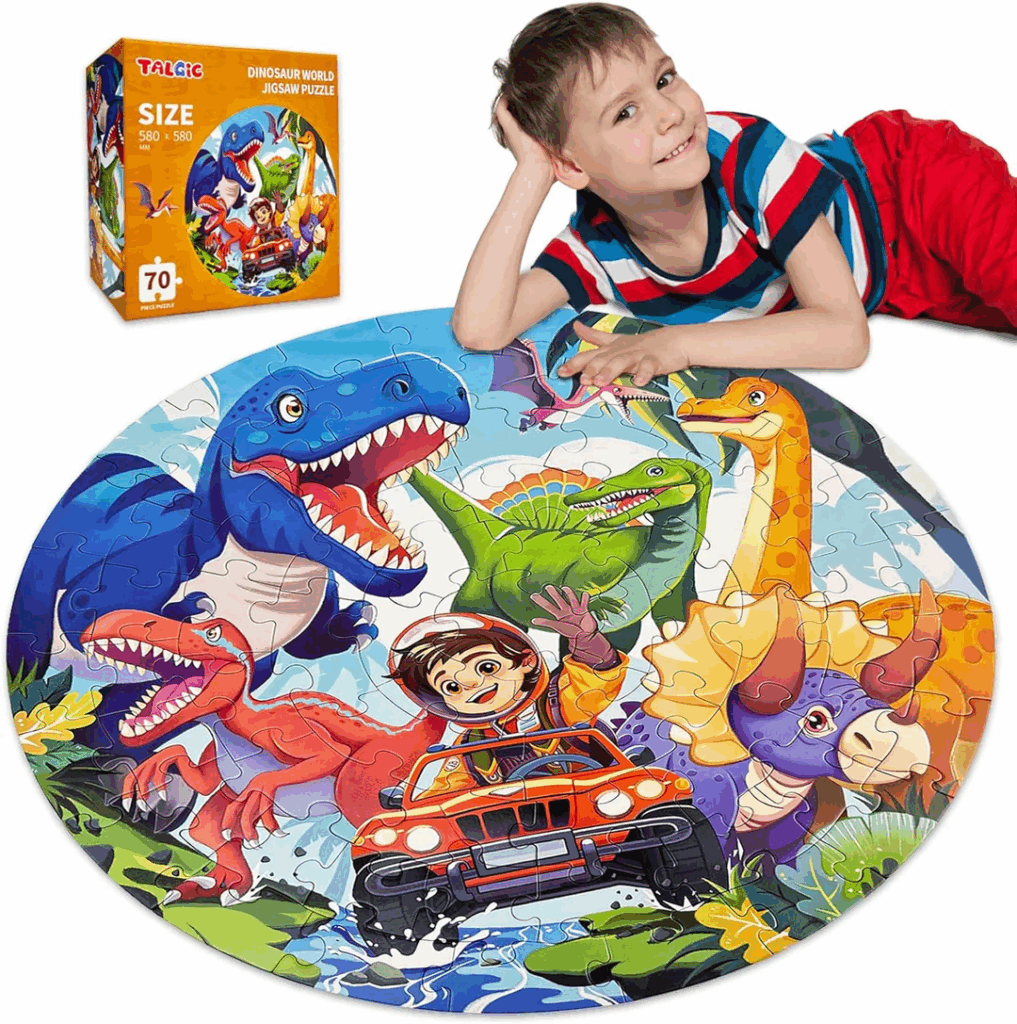
Puzzles help children use matching, grouping, and sorting skills in a more advanced way, along with logic and spatial thinking.
- Many kids start by sorting pieces by color or pattern to find what fits together.
- As they get better, they group edge pieces and start with the border, using simple strategies to finish puzzles faster and more confidently.
Recommended puzzles with different themes:
- Ocean Puzzles for 3-6 years old
- Dinosaur Puzzles for 3-8 years old
- Chirstmas Puzzles for 4-8 years old
- Solar System Puzzles for 4-8 years old
Choose toys that grow with your child—like the Thinkit Sorting Box, designed to support both teacher-led instruction and at-home practice.
Why Think Academy Designed a ThinKit Class using the Sorting Box
Our classroom-tested sorting box was developed based on real learning patterns of 3–4-year-olds. It’s used to:
- Combine guided teaching with play
- Capture classroom behavior via video for parent feedback
- Build routines, group awareness, and classroom confidence
This structured yet playful tool supports success both at home and in preschool settings.
Looking for early childhood math learning resources?
Ready to Spark Early Learning at Home?
ThinKit: Match It, Play It, Love It! Kids explore shapes, colors, and patterns hands-on—while developing early math and thinking skills that matter.
???? Includes:
- Premium sorting box + sensory tools
- Structured lessons + feedback
- Kids build skills while they play, talk, and create
✨ Limited spots available.
???? [Register now] to be among the first to experience Think Academy’s newest early math program!
Think Academy Math Program
If you’re looking to build on math strengths or close math gaps, we offer comprehensive K–12 math programs designed to:
- Catch up: Fill in gaps and strengthen foundational skills
- Stay ahead: Maintain a competitive edge and accelerate math progress
- Go further: Take on challenge math competitions, Math kangaroo, AMC competitions
Next Step: Take a personalized evaluation to understand your child’s current math progress and get a tailored roadmap for courses, pacing, and goals.
About Think Academy
Think Academy, a leading K–12 math education provider wholly owned by TAL Education Group, is dedicated to helping students build strong mathematical foundations and critical thinking. Our structured curriculum provides multiple course levels designed to accommodate students with diverse academic goals and proficiency levels, ensuring targeted and effective learning experiences. Supported by advanced teaching methods, expert instructors, and innovative AI technology, Think Academy consistently demonstrates excellence, trustworthiness, and proven expertise in mathematics education.
Want more insights on math education and parenting tips? Subscribe to our newsletter for weekly expert advice and updates on the latest learning tools.
Leave a Comment & Share Your Thoughts!

Share This Story, Choose Your Platform!
Related Posts